You land in Las Vegas expecting one thing: the Strip, with its glowing casinos, fountain shows, and endless neon. But if you stop there, you miss the strangest, most memorable side of the city. Beyond the famous boulevard, Las Vegas hides a collection of genuinely unusual places — desert canyons, historic neon graveyards, immersive art worlds, and quiet gardens — that most first-time visitors never hear about. These are the spots that turn a standard Vegas trip into a story worth retelling.
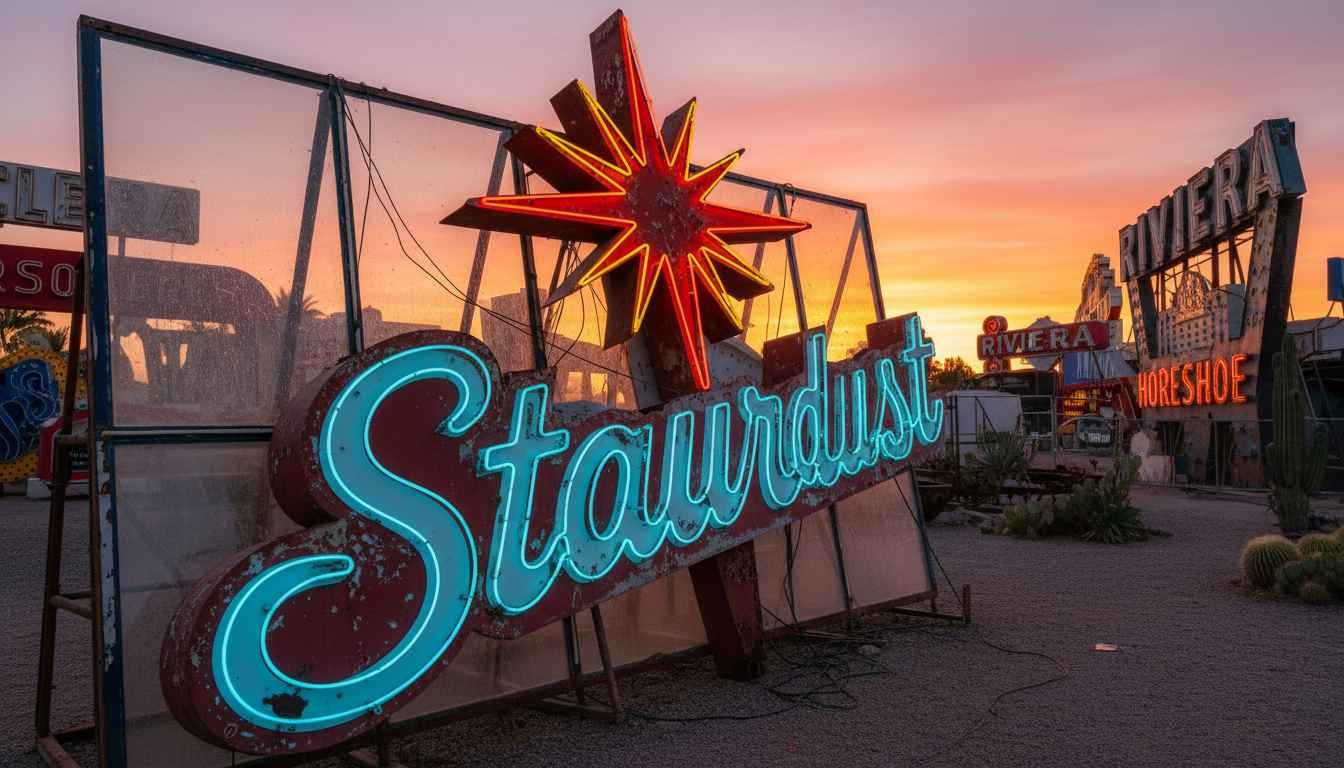
The Neon Boneyard
Every retired casino sign in Las Vegas has to go somewhere, and many end up at the Neon Museum downtown. The outdoor exhibition space, known as the Neon Boneyard, holds more than 200 unrestored signs from the city’s golden age — the Stardust, the Sahara, the Moulin Rouge — slowly rusting into something beautiful. Guided tours run through the boneyard, where staff share the stories behind each sign: the casinos that built them, the decades they lit up, and the fires, demolitions, and revivals they survived. It is part history lesson, part open-air art gallery, and entirely unlike anything else in the city.
Red Rock Canyon
About a half-hour drive west of the Strip, the Mojave Desert takes over. Red Rock Canyon National Conservation Area is a sweep of towering red sandstone cliffs, hidden springs, and petroglyphs left by ancient cultures. The 13-mile scenic drive loops through the best of it — Calico Hills, High Point Overlook, the Ice Box Canyon trailhead — and you can stop anywhere along the way for short hikes or photographs. Go early in the morning or near sunset, when the low light turns the rock formations a deep, glowing red. It feels impossibly far from the casino floor, even though it is not.
Valley of Fire State Park
If Red Rock Canyon leaves you wanting more, Nevada’s oldest state park is worth the longer drive northeast of the city. Valley of Fire is famous for its intensely red Aztec sandstone formations and for petroglyphs carved into the rock thousands of years ago. Spots like the Fire Wave, Elephant Rock, and the White Domes feel otherworldly — striped, rippling rock that glows under the desert sun. It is one of the most photographed natural landscapes in the American Southwest, and yet many Vegas visitors never leave the Strip long enough to see it.
Area15
Just west of I-15 sits Area15, an indoor entertainment complex built around large-scale immersive art. Its centerpiece is Omega Mart by Meow Wolf — a parody supermarket where every product hides a portal into surreal, explorable worlds behind the shelves. Beyond it, the complex hosts rotating art installations, virtual-reality experiences, live performances, and themed bars. It draws a crowd that tends to skew younger and art-curious, and it feels closer to a warehouse district in Berlin or Brooklyn than to anything on the Strip.
The Mob Museum
Housed in a former federal courthouse downtown, The Mob Museum (officially the National Museum of Organized Crime and Law Enforcement) tells the story of the mob’s role in shaping Las Vegas — and the law-enforcement efforts that pushed back. Exhibits cover Prohibition, bootlegging, and the casino-era mob figures who helped build the city, alongside artifacts like the brick wall from the St. Valentine’s Day Massacre. It is a serious, well-curated museum, and a sharp contrast to the glitz a few blocks away on Fremont Street.
Seven Magic Mountains
Drive about ten miles south of the Strip and you will find one of the desert’s most photographed oddities: Seven Magic Mountains, a cluster of seven towering stacks of neon-painted boulders rising from the dry lake bed. Created by Swiss artist Ugo Rondinone, the installation was originally meant to be temporary — it proved so popular that it stayed. The bright, stacked rocks against the empty desert make for some of the most striking photos you will take in Nevada. Go on a weekday morning to beat the crowds.
Downtown Arts District
South of downtown proper, the Las Vegas Arts District (often called 18b) is the city’s creative quarter — a walkable stretch of murals, independent galleries, vintage shops, coffee houses, and antique stores. On the first Friday of each month, the neighborhood hosts a free art celebration with open galleries, street performers, and food trucks. Even on an ordinary day, it is the best place in the city to buy something made by a local artist and to see a side of Vegas that has nothing to do with slot machines.
The Pinball Hall of Fame
Pinball almost disappeared from American arcades decades ago — but not in Las Vegas. The Pinball Hall of Fame is a nonprofit museum and working arcade packed with hundreds of pinball machines dating back to the 1950s, plus classic arcade games. The machines are all playable, and the money they take in goes to charity. It is inexpensive, nostalgic, and genuinely fun for all ages, making it one of the best rainy-day (or midday-heat) escapes in the city.
Ethel M Chocolate Factory and Botanical Cactus Garden
In nearby Henderson, the Ethel M Chocolate Factory pairs a working chocolate factory with a three-acre botanical cactus garden — one of the largest such gardens in the Southwest. You can watch chocolates being made through viewing windows, then wander the garden paths among hundreds of cacti, succulents, and desert trees. Around the holidays, the garden is strung with lights for its annual cactus garden lighting display. It is a quiet, sweet-smelling contrast to everything the Strip stands for.
Free and Low-Cost Unique Sights
Not every memorable Vegas experience costs money. The Bellagio Conservatory & Botanical Gardens rebuilds its enormous floral displays with the seasons, and the Fremont Street Experience downtown puts a canopy light show over five blocks of pedestrian mall — both are free to visit. If you are traveling on a budget, our guide to places to visit in Vegas for free rounds up the best no-cost attractions, so you can balance the paid adventures above with sights that cost nothing at all.
Frequently Asked Questions
What is the most unique thing to do in Las Vegas?
The Neon Boneyard and Area15’s Omega Mart are the two experiences visitors describe as truly one-of-a-kind. The Boneyard is pure Vegas history told through retired casino signs, while Omega Mart is a full-scale immersive art world disguised as a supermarket.
How far is Red Rock Canyon from the Strip?
The Red Rock Canyon scenic drive entrance is about a 30-minute drive west of the Strip, making it an easy half-day trip. Arrive early in the day for cooler temperatures and better light on the rock formations.
Are there unique places in Las Vegas for families?
Yes. The Springs Preserve, the Pinball Hall of Fame, the Ethel M cactus garden, and the Bellagio Conservatory are all family-friendly. Area15’s art installations also appeal to older kids and teenagers.
Final Thoughts
Las Vegas earns its reputation as an entertainment capital, but the city’s most interesting places are the ones that have nothing to do with casinos. A neon graveyard, a desert canyon, an immersive art supermarket, a stacked-boulder sculpture in the middle of nowhere — this is the Vegas that locals show their visiting friends, and it is the version of the city you will remember longest. Pick two or three of these spots, leave the Strip behind for a day, and see how much stranger and richer Las Vegas really is.