You step out of the Smithsonian Metro station, and there it is — the Washington Monument rising into the sky, with the long green carpet of the National Mall stretching out in both directions. In just two days you can stand inside the halls where history is kept, watch the light change over the memorials, and eat your way through one of America’s most underrated food cities. This Washington DC 2-day itinerary for first-time visitors shows you exactly how.
How to Use This 2-Day Itinerary
This plan assumes you arrive the evening before Day 1 (or start very early) and have two full days. The good news: most of what you’ll see is free. The trade-off: the few things that are not walk-in visits need to be booked ahead of time, so read the “tickets” note in each day and sort those before you leave home.
Pack comfortable shoes — the National Mall is roughly 2 miles long end to end, and you will walk a lot. Mornings are for the monuments (fewer crowds, better light), afternoons for museums, evenings for the monuments again, lit up.
Day 1 — The National Mall and Capitol Hill
Morning: Monuments and Memorials on Foot
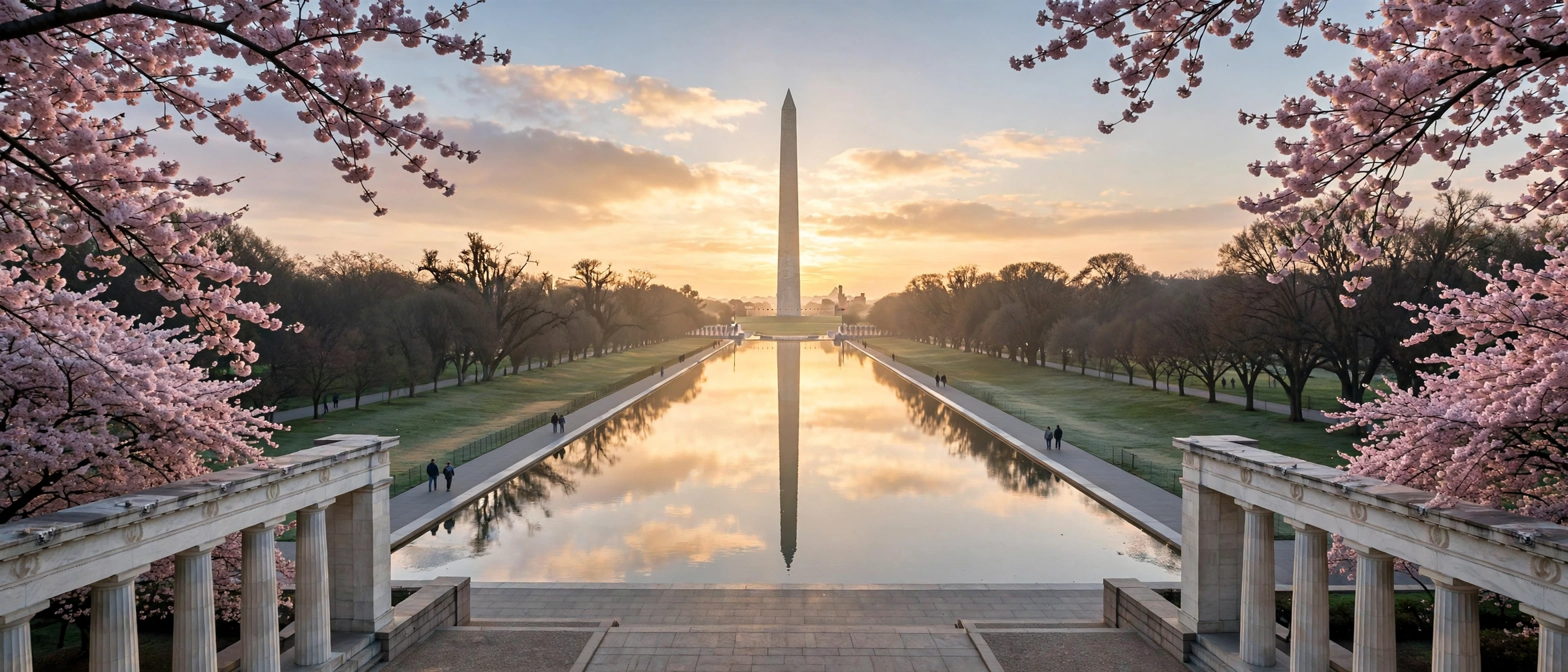
Start at the Lincoln Memorial at opening time. Standing at the top of the steps, looking down the Reflecting Pool toward the Washington Monument, is the single most iconic view in the city — and at 8 or 9 in the morning you may almost have it to yourself.
Walk the west half of the Mall from here: the Vietnam Veterans Memorial and the Korean War Veterans Memorial sit within a few minutes of each other in the trees near the Lincoln Memorial. Both are quiet, moving stops that take about 15–20 minutes each. Continue east to the World War II Memorial, then reach the Washington Monument itself.
A note on the monument: riding the elevator to the observation deck requires a timed-entry ticket (entry itself is free). A small number of same-day tickets are released each morning, but they go fast — book an advance slot online instead if you want to be sure.
Afternoon: Capitol Hill
Take the Metro or walk the Mall east to Capitol Hill. The US Capitol Visitor Center runs free guided tours that explain how Congress actually works, including the Rotunda and National Statuary Hall — but walk-ins are limited, so reserve a tour slot in advance. Right behind the Capitol, the Library of Congress Thomas Jefferson Building is worth 45 minutes on its own: the Main Reading Room viewed from the visitors’ gallery is one of the most beautiful interiors in America, and general entry is timed.
Lunch options are plentiful on Capitol Hill — Barracks Row on 8th Street SE has a row of casual restaurants a ten-minute walk south of the Capitol.
Evening: The Monuments by Night
The memorials stay open and are free to visit around the clock, and they look entirely different after dark. Walk the Tidal Basin loop at dusk: the Martin Luther King Jr. Memorial and the Franklin Delano Roosevelt Memorial are designed to be experienced slowly, and the crowds thin out beautifully in the evening. If it’s your first night, this walk is the best free show in the city.
Day 2 — Museums, Georgetown, and the Best Neighborhoods
Morning: Pick One Big Museum
You cannot do all the Smithsonians in one morning — don’t try. Pick one and give it two to three hours:
- **National Air and Space Museum (on the Mall):** the Wright Flyer, the Apollo 11 command module, and a full-size Hubble test telescope. Free, but requires a free timed-entry pass booked ahead.
- **National Museum of American History:** the Star-Spangled Banner, the First Ladies’ inaugural gowns, and Dorothy’s ruby slippers. Walk in, no pass needed.
- **National Museum of Natural History:** the Hope Diamond and the giant squid. Walk in, no pass needed.
- **National Museum of African American History and Culture:** the newest and most moving of them all — but it’s the hardest ticket in town. Admission is free and every visitor needs a timed-entry pass; advance passes are released online about a month ahead, and a limited number of same-day passes go live early each morning.
Confirm ticketing rules on each museum’s official site before you go — they change with the seasons. This guide to which DC attractions need advance tickets is a useful pre-trip checklist, and it was recently updated.
Afternoon: Georgetown
Cross into Georgetown, the city’s oldest neighborhood, for the second half of the day. M Street and Wisconsin Avenue hold the shops, the Chesapeake & Ohio Canal towpath makes a peaceful walking route, and the waterfront at the Potomac is lined with restaurants. Georgetown University sits on the hill above it all. This is also the best place on the itinerary to slow down: grab a coffee, wander the side streets of Federal-style row houses, and rest your feet before dinner.
For a broader sense of what’s worth your time in the city, skim our roundup of the best places to visit in Washington DC — it will help you pick swaps if any stop on this itinerary doesn’t fit your interests.
Evening: Dinner With a View
End the trip along the Southwest Waterfront. The Wharf — a mile-long stretch of restaurants, piers, and public space on the Washington Channel — is built for exactly this: dinner outside, a stroll along the water, and the city lights coming on. If you want one last classic view instead, the free rooftop terrace at the Kennedy Center looks straight down the Potomac; hours vary, so check before you go.
Getting Around Washington DC
The Metro is the backbone: six color-coded lines connect the Mall, Capitol Hill, Georgetown (via Foggy Bottom), and the airport. Buy a SmarTrip card at any station — a single card works for Metro and buses. Everything on Day 1’s Mall route is walkable, and Day 2’s Georgetown afternoon is best done on foot. Avoid driving if you can; parking near the Mall is scarce and expensive.
Practical Tips for First-Time Visitors
- **Most major attractions are free.** The Smithsonian museums, the memorials, the Capitol tour, and the Library of Congress cost nothing — budget goes to hotels, food, and Metro fares.
- **Book the timed passes before you fly.** In order of difficulty: the National Museum of African American History and Culture, the Washington Monument, and the Air and Space Museum on the Mall. Sort these weeks ahead if possible.
- **The White House tour is a long shot for most visitors.** Public tours must be requested weeks or months ahead through a Member of Congress (US citizens) — worth knowing so you don’t plan a day around it.
- **Security everywhere.** Museums, the Capitol, and government buildings run airport-style screening. Bring as little as possible and arrive 15–20 minutes before any timed slot.
- **Dress for walking, not for photos.** You’ll easily cover 8–10 miles a day. Comfortable shoes matter more than anything else on this itinerary.
DC’s historic and scenic stops are spread across the whole city, so if you have energy left over, our guide to cultural, historical, and scenic sites in Washington DC has ideas for filling the gaps.
Frequently Asked Questions
Can you really see Washington DC in 2 days?
Yes — the essentials. Two focused days cover the National Mall memorials, one or two Smithsonian museums, the Capitol, and one neighborhood like Georgetown. You won’t see everything, but you’ll see the best of it, and you’ll know what to come back for.
Is Washington DC walkable?
Very, for the main sights. The National Mall and Capitol Hill are flat and pedestrian-friendly. Use the Metro for longer hops (Georgetown, the Wharf, your hotel) and you’ll rarely wait more than a few minutes for a train.
How much does a 2-day trip to DC cost?
Since the memorials and most museums are free, two people can comfortably cover sights, Metro, and mid-range food for well under what most US city breaks cost. Hotels are the biggest variable — staying near a Metro line in Arlington or on Capitol Hill often beats downtown prices.
When is the best time to do this itinerary?
Any time of year works — the museums are indoors and the memorials are always open. Spring (cherry blossoms) and fall (mild weather) are the most pleasant for walking; summer is hot and crowded, winter is quiet but some outdoor hours shorten.
Final Thoughts
Two days in Washington DC is really two trips in one: the grand, open-air story of the National Mall, and the living city of neighborhoods, museums, and riverfronts around it. Book the handful of timed tickets in advance, start your mornings early, and let the evenings belong to the memorials. Do that, and your first visit will feel complete — not rushed.