Picture your living room on a quiet evening. The television sits at a comfortable height, the remote controls and game controllers each have a home, and the cables that used to snake across the floor have disappeared behind closed doors. Nothing feels crowded, and nothing feels bare. That calm, finished look is exactly what a good entertainment unit delivers — and when it is made from pine, it brings a warmth that darker, heavier furniture often misses.
A pine entertainment unit is a low cabinet, usually with a mix of open shelves and closed cupboards, built to hold a television and its equipment. This guide explains how to choose one that fits your room, your television and the way you live.
What a Pine Entertainment Unit Actually Is
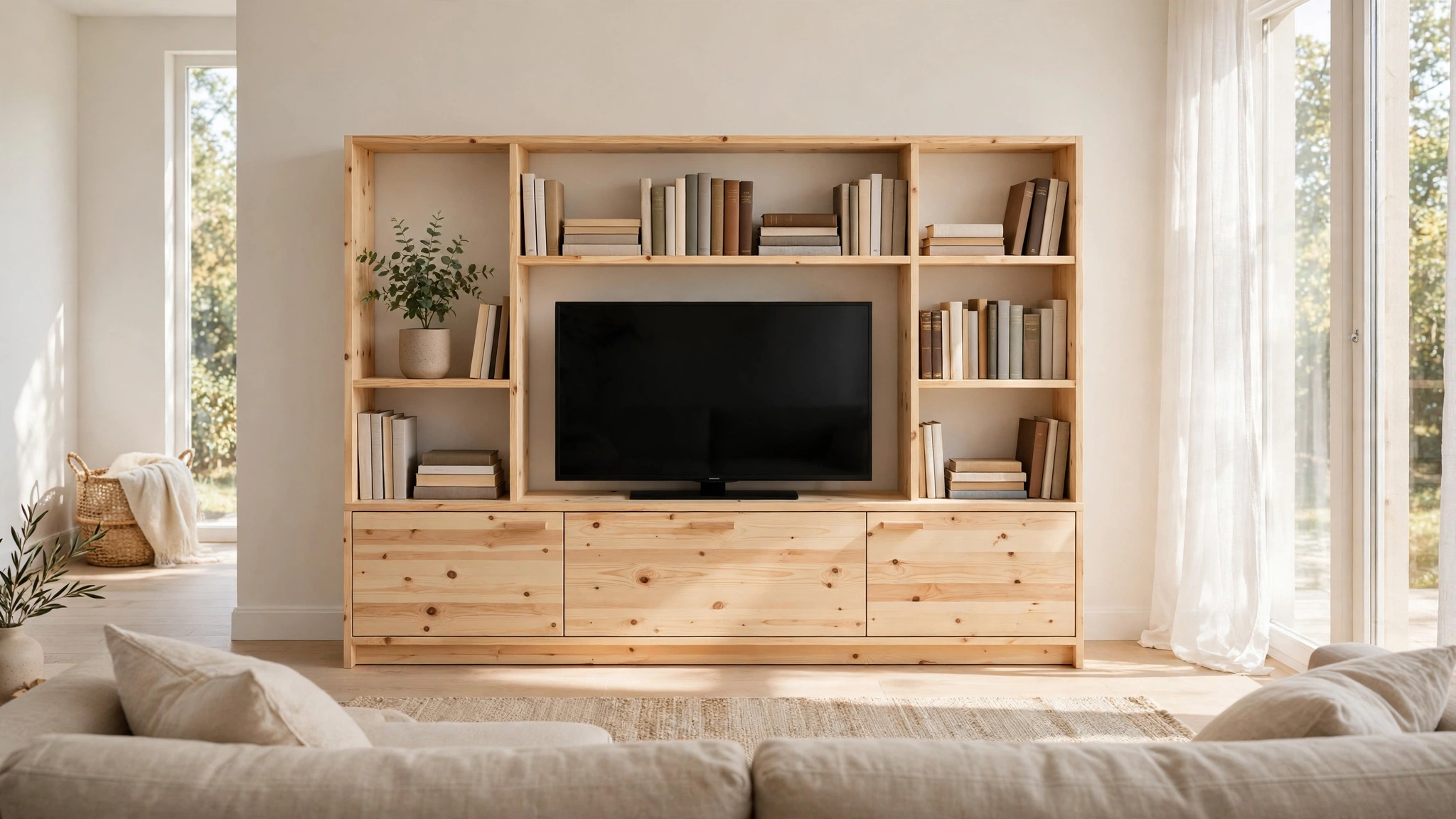
At its simplest, an entertainment unit is a TV stand with storage built in. The television rests on top or mounts on the wall above it, while the shelves and cupboards below hold a set-top box, games console, soundbar and books. Larger versions stretch into wall units with side shelving.
Pine is a softwood with a pale, honey colour and a visible grain, often with small knots that give each piece its own pattern. Because it is a softwood, a pine unit tends to be lighter to move than the same design in oak or walnut, which matters when you need to reach the cables behind it. That same softness is also the wood’s main weakness, and it is worth understanding before you buy.
Why Pine Suits a Living Room
Pine works in a living room for three practical reasons: colour, texture and flexibility. Its pale tone reflects light, so it can make a small or north-facing room feel brighter. The grain adds texture without a strong pattern, so it sits comfortably beside patterned cushions and rugs. And because pine takes paint and stain well, the same basic unit can be finished to suit a Scandinavian-style room, a rustic farmhouse look, or a modern space.
Pine is also a fast-growing timber, and if sustainability matters to you, look for certification marks such as FSC on the listing when you shop — a helpful signal that the timber came from a managed forest, to weigh alongside build quality and price.
Getting the Size and Layout Right
Size is where most buying mistakes happen, and it is the easiest one to avoid. Measure the wall where the unit will stand, then measure again, and leave breathing room on each side so the unit does not look wedged in. As a rule of thumb, choose a unit that is wider than your television by at least a few inches on each side, leaving room for a soundbar or a small lamp.
Height matters just as much: when you sit in your usual seat, the centre of the screen should sit at eye level. Also measure the deepest item the unit must hold, and check the doorways and stair turns the unit must travel through to reach the room.
Storage That Keeps the Room Calm
Before you fall for a design, think about what you actually own. Count the boxes, consoles, controllers, DVDs, books and board games that need a home, then match the storage to that list. Closed cupboards and drawers are best for the things you want out of sight: cables, controllers, chargers and anything with a blinking light. Open shelves suit books, a plant or a framed photo — the objects that make the room feel lived in rather than staged.
Adjustable shelves are worth looking for, because the equipment you own today will change. A shelf that can move up or down lets the same unit hold a tall games console now and a row of books later.
Setting Up Your TV and Sound Without the Cable Mess
A tidy entertainment unit hides its workings. Look for cable holes or channels in the back panel, so each device’s lead can drop straight down to a power strip tucked inside a cupboard instead of trailing across the floor. If the unit you like has a solid back with no holes, a slim cable trunking strip along the wall achieves much of the same result.
Leave space for air, too. Consoles and set-top boxes give off heat, and a tight, closed cupboard with no ventilation can make them run hot, so leave a gap at the back or the door ajar during a long gaming session. If you want the sound to match the picture, a simple home audio setup with one remote for the whole system can keep the coffee table clear of controllers.
Finishes and Styles: Natural, Painted or Stained
A clear or natural finish shows off pine’s grain and honey colour, and it is the easiest choice if you like the wood to speak for itself. A whitewash keeps the grain visible while lightening the tone, which suits coastal or Scandinavian rooms. A stain deepens the colour toward oak or walnut tones without hiding the grain, while a painted finish — white, sage green, soft grey or navy — turns the unit into a piece of painted furniture that can anchor a modern scheme.
If you like the look of horizontal wood panelling behind the television, a shiplap entertainment center gives the same warm, textured feel in a slightly different style, and it is worth comparing the two before you decide. Whichever finish you choose, check how it was applied: a lacquered or waxed surface resists marks better than raw, unfinished pine, which picks up every ring from a mug.
Looking After Pine Wood
Pine is softer than hardwoods such as oak, so it dents and scratches more easily. That is not a reason to avoid it, but it is a reason to treat it with a little care. Use coasters under drinks, felt pads under heavy objects, and a soft, dry cloth for dusting. Avoid harsh chemical cleaners, which can strip a waxed or lacquered finish; a slightly damp cloth is enough for most marks. Sunlight will deepen pine’s colour over time, so rotate the objects on the shelves now and then to keep the colour even. Small scratches are part of living with a softwood, and a wax touch-up stick in a matching tone will make most of them hard to notice.
What to Check Before You Buy
A short checklist saves disappointment later. Measure the wall, the television and the delivery route. Check the maker’s stated weight limit for the exact model and confirm it covers your television — do not guess from the size of the unit alone. Check the joints and the back panel, test the drawers and doors, and ask about assembly, delivery and returns before you pay.
FAQ:
Is pine strong enough to hold a large television?
For most living-room televisions, yes. A well-built pine unit with a solid top and a sturdy frame is designed for the job, but always check the maker’s stated weight limit for the exact model.
Does pine scratch easily?
Pine is softer than oak or walnut, so it can dent and scratch more readily. Coasters, felt pads and a little care go a long way, and small marks can usually be disguised with a wax touch-up stick in a matching tone.
Can I paint a pine entertainment unit?
Yes. Sand the surface lightly, fill any dents, prime it — paying attention to the knots, which can show through paint over time — and then apply your chosen paint. A painted pine unit is a good way to refresh a second-hand piece or match a new colour scheme without buying new furniture.
How do I keep the cables hidden?
Run each lead through the cable holes in the back panel to a power strip inside a cupboard. If your unit has no cable holes, a slim trunking strip along the wall behind it hides the run neatly.
Final Thoughts
A pine entertainment unit earns its place by doing two jobs at once: it holds the television and the equipment around it, and it makes the room feel warmer and more settled. The best choice is the unit that fits your wall, holds what you own and hides what you do not want to see. Measure first, check the weight limit and the cable route, and choose a finish you will still like in five years.