You are easing off a busy road, foot on the brake, when a thin squeal cuts through the usual road noise. It stops when you lift off, comes back the next time you brake, and you spend the rest of the drive wondering whether you imagined it. You probably did not. Brakes rarely fail without warning — they complain first, quietly, and then louder. Learning to recognise those complaints matters, because brakes are not a part you want to gamble on.
A brake inspection checks pads, discs, calipers, hoses and fluid. Most signs below mean “book a check soon”; a few mean “do not keep driving on this”.
The Sounds: Squealing and Grinding
Sound is usually the first sign, and each sound points to something different.
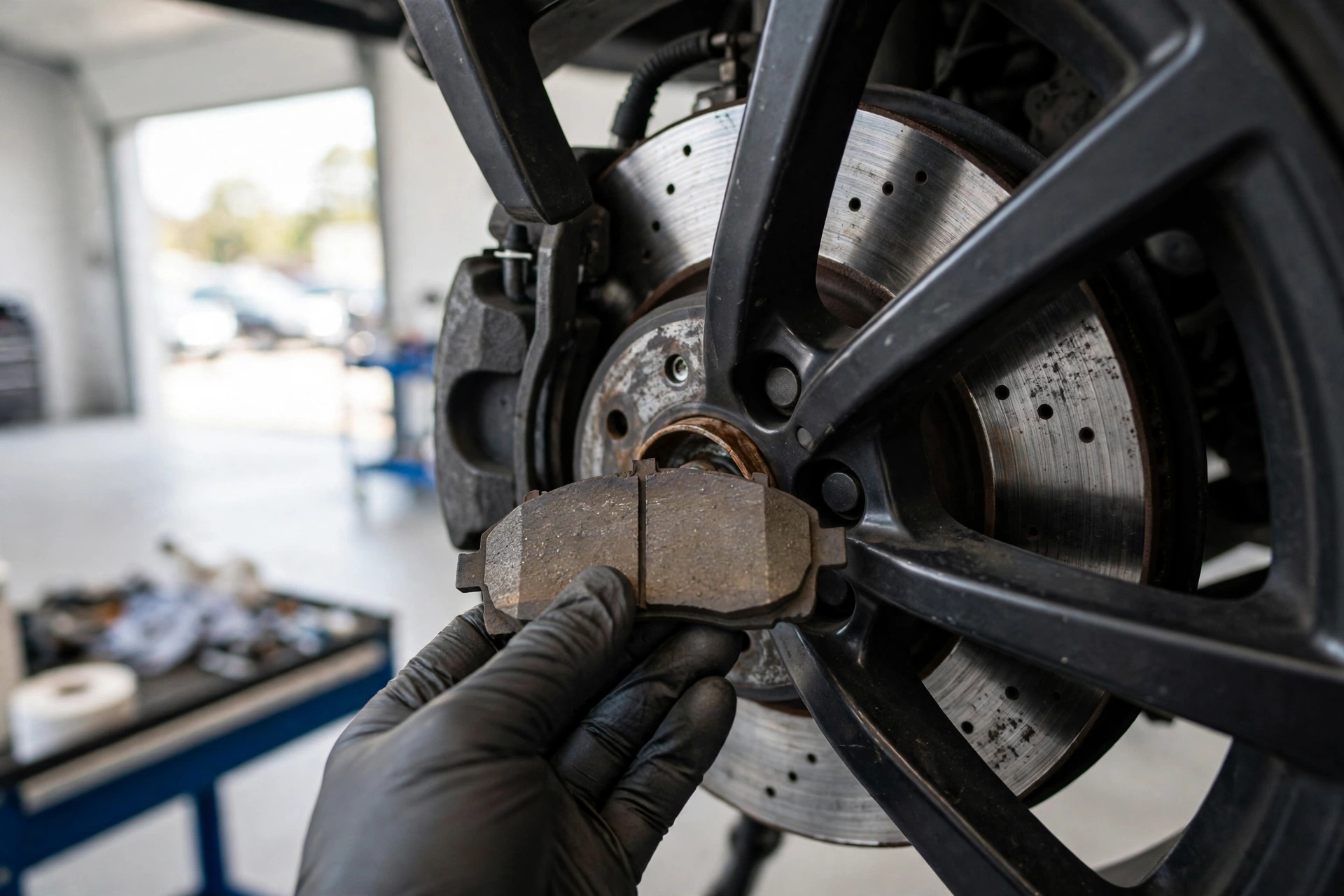
A high-pitched squeal when you brake, which disappears when you release the pedal, is often the wear indicator on a brake pad doing its job: a small metal tab designed to make noise as the pad wears thin. It is your early warning, not an emergency on its own — but it is not a sound to ignore for months either. Get the pads checked while the fix is still likely to be pads alone.
Grinding is more serious. A harsh, metallic grinding usually means the pad material is worn through and metal is meeting metal. That damages the disc, lengthens stopping distances and can turn a routine pad change into a much bigger repair. If you hear grinding, book an inspection promptly and drive gently and only as far as necessary until it is checked.
One caution: brakes can squeak briefly on a damp morning and then go quiet once dry. That is not the same as a squeal that appears every time you brake — if the noise is consistent, treat it as a sign.
How the Pedal Feels
Your foot notices brake trouble before your eyes do. Pay attention to any change from normal.
A soft or spongy pedal — one that sinks further than usual, or needs more pressure for the same stopping power — can point to air or moisture in the brake fluid, a fluid leak, or a worn master cylinder. This is a safety issue: do not wait for the next service to have it checked.
A pedal that vibrates or pulses, especially when braking from higher speeds, often means a disc that is warped or unevenly worn. The car may still stop, but braking is less smooth and less predictable, and the vibration tends to get worse rather than better.
A pedal that feels very hard, or needs much more effort than usual, can point to a problem with the brake booster or a seized caliper. And a pedal that sinks slowly to the floor while you hold it at a standstill should be treated as urgent — have the car checked before driving it further if you safely can.
When you book, describe exactly what changed — “soft pedal since Tuesday” helps a mechanic far more than “brakes feel odd”.
How the Car Behaves When You Brake
Watch what the car itself does, not just what you hear and feel.
If the car pulls to one side when you brake, one side may be braking harder than the other — a sticking caliper, a collapsed hose, uneven pad wear, or contamination on one side are all possible causes. Pulling can also come from tyres or suspension, but because it affects steering under braking, it belongs on the inspection list either way.
Vibration through the steering wheel while braking is another common sign of uneven discs. So is a car that takes noticeably longer to stop than it used to, even if no warning light has come on. If you find yourself braking earlier for familiar junctions, trust that instinct and get the brakes checked.
A burning smell under normal driving, or brakes that feel weaker after a long downhill stretch, can mean overheated brakes — have them inspected.
Warning Lights and Things You Can See
A few signs you can spot yourself, without taking anything apart.
The brake warning light can mean the handbrake is still on, but if it is not, it may mean low brake fluid or a fault in the braking system. Do not assume it is a faulty sensor. Check the fluid level if you know how and it is safe to do so; if the level is low or the light stays on, arrange an inspection rather than topping up and carrying on — low fluid often means something is leaking or the pads are very worn.
Through the wheel spokes, you may be able to see the disc surface: deep grooves, heavy rust after normal driving, or a lip on the outer edge are all worth mentioning at an inspection. Brake fluid in the reservoir should be clear to amber; very dark fluid is a sign it is overdue for replacement. Any fluid leaking near a wheel should be checked promptly — brake fluid leaks are not a wait-and-see problem.
On many cars you cannot judge pad thickness by eye, because the pads sit hidden behind the caliper. If you cannot see them clearly, do not guess.
Which Signs Are Urgent
Not every sign needs the car recovered, but none should be filed away indefinitely:
| Urgency | Signs |
|---|---|
| Get it checked before driving further, if you safely can | Grinding brakes, a pedal that sinks to the floor, a brake warning light that stays on, a visible fluid leak, or brakes that barely slow the car |
| Book within days | Consistent squealing, a soft or spongy pedal, pulling to one side, vibration when braking, or a burning smell under normal driving |
| Mention at the next service, or sooner if it worsens | A brief squeak on damp mornings that clears quickly, or a disc that looks rusty after the car has stood unused for a while |
If you are unsure which group your symptom falls into, err on the side of an earlier check. A brake inspection is usually quick, and checking a healthy system costs little compared with a damaged disc — or a failed stop.
What a Brake Inspection Covers, and How Often
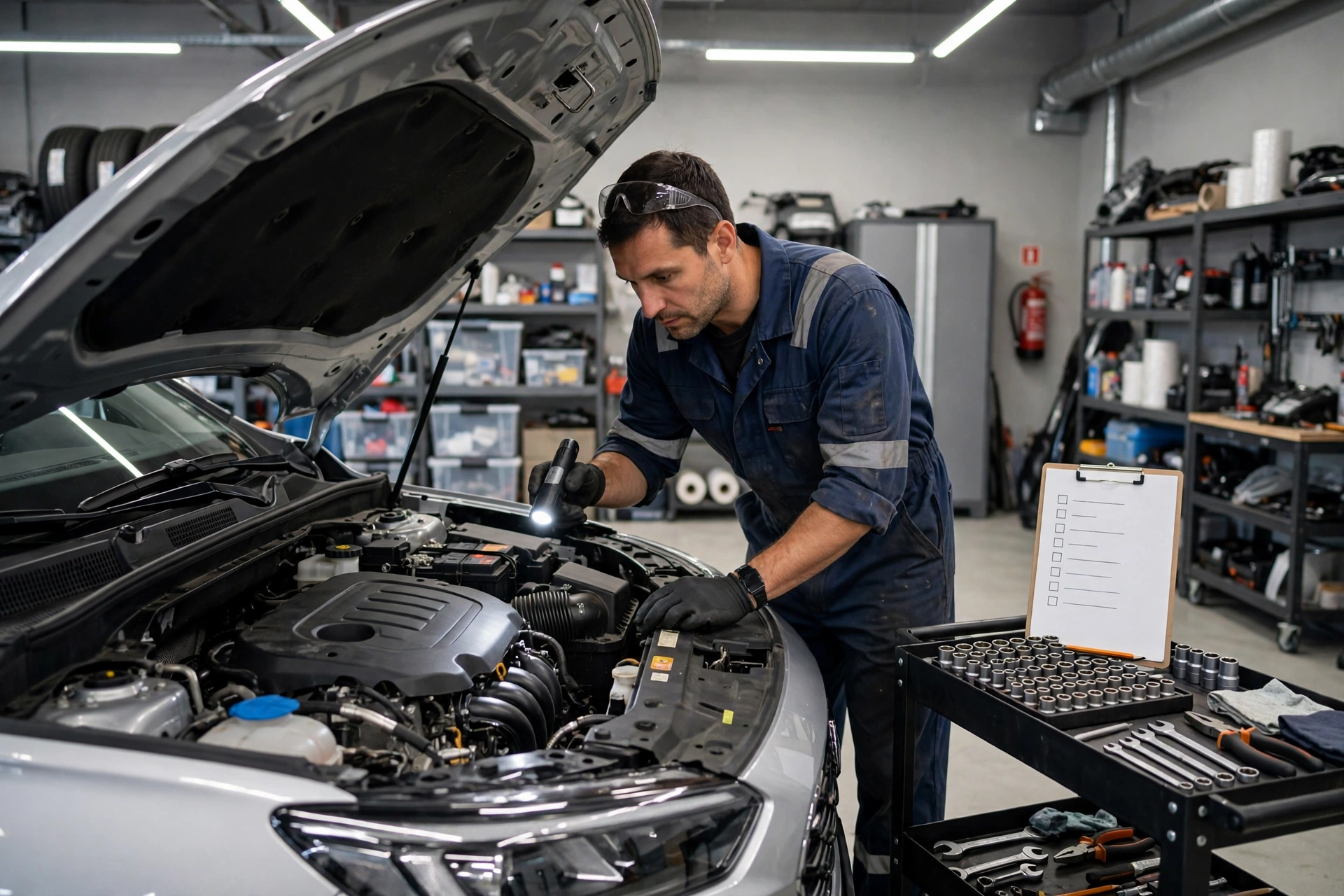
A typical inspection covers pad thickness and wear on each wheel, disc condition and thickness, caliper movement, hoses and pipes for leaks or damage, brake fluid level and condition, and the handbrake. Ask the mechanic to split the findings three ways: what needs replacing now, what is wearing but still safe, and what to watch before the next visit. That split lets you plan rather than react, and the report is worth keeping with your service records.
Brakes should be looked at at every service, and sooner if any sign above appears. Our guide on how often you should service your car explains how service intervals work and why condition checks between services matter.
Before a Long Trip, Check the Brakes First
Brakes deserve a place at the top of any pre-trip checklist. A long journey means repeated braking, often with a loaded car, in unfamiliar traffic — exactly the conditions that expose a marginal brake. If any sign in this guide is already present, get it sorted before you leave rather than hoping it holds for the trip. Our guide on how to plan a road trip on a budget in the USA covers budgeting, cheap stays and fuel savings for the journey itself; this article covers making sure the car stops safely all the way there and back.
Choosing a Garage for Brake Work
You do not need a main dealer for brake work, but you do need a garage that will show you the worn parts, explain what it is replacing and why, and use parts suited to your car. Ask whether the quote covers pads only or pads and discs, and whether fluid is included. A workshop profile like Oscars Auto Service illustrates the standard to look for: maintenance treated as precision work, with the reasoning explained.
Frequently Asked Questions
Can I keep driving if my brakes squeal but still stop fine?
For a short while, usually — squealing is an early warning, and the car will normally still stop. But it means the pads are wearing thin, and the gap between “pads only” and “pads plus discs” can close quickly. Book an inspection within days, not months, and sooner if the sound turns to grinding.
How long should brake pads last?
There is no single answer, and any garage that gives you one without knowing your car and driving is guessing. Pads wear faster with frequent short trips, stop-start city driving, heavy loads and hilly routes, and slower with steady longer journeys. That is why condition checks matter more than a calendar date: have them measured at each service and act on the measurement.
Should I replace brakes on both sides at once?
Yes, as a rule. Brakes work as a pair on each axle, and replacing only one side can leave the car braking unevenly and pulling to one side. A reputable garage will recommend axle pairs for pads and discs, and will explain if your car is an exception.
Final Thoughts
Brakes give you fair warning — a squeal, a softer pedal, a pull to one side, a light on the dashboard. The mistake is not missing those signs; it is hearing them and deciding to wait until the next service or the next trip. Book the inspection while the fix is small, keep the report, and drive with the quiet confidence that comes from knowing the one system you rely on most is in good shape.