Imagine driving from a castle-topped hill town in the morning to a forest lake by afternoon, then ending the day in a city famous for cars, wine, and one of Germany’s oldest universities. That is Baden-Württemberg in a nutshell: a southwestern German state where historic towns, the Black Forest, and modern cities sit close together, and where a short journey can feel like several holidays at once.
Baden-Württemberg is Germany’s third-largest state, bordering France and Switzerland, and it rewards travellers who mix its cities with its countryside. Here are the places that deserve your time first.
Stuttgart: Cars, Culture, and Green Hills
Stuttgart, the state capital, is best known for its automotive history. The Mercedes-Benz Museum and the Porsche Museum both tell the story of cars that were designed and built here, and both are worth a visit even if you are not a car enthusiast — the buildings and exhibits are designed for general visitors as well.
Beyond the museums, Stuttgart is greener than many visitors expect. The Wilhelma, a combined zoological and botanical garden in a historic Moorish-style complex, and the vineyards that climb the hills around the city centre, make for easy, relaxing afternoons. The Schlossplatz, the city’s main square, is a good starting point for a walk through the old centre.
The Black Forest: Villages, Lakes, and Trails
The Black Forest, or Schwarzwald, stretches across the southwest of the state. It is famous for dense woodlands, traditional farmhouses, and villages such as Triberg, known for its waterfalls, and Titisee-Neustadt on the shores of Lake Titisee.
Hiking and cycling are the main draws, with well-marked trails for all levels, and in winter some areas offer cross-country skiing. If you prefer a slower pace, take the scenic railway routes through the forest valleys, or simply base yourself in one village and explore its lakes and gorge walks on foot.
The region is also the home of Black Forest gateau and traditional cuckoo clocks — both make for better souvenirs when bought from a local workshop or bakery than from a generic gift shop.
Heidelberg: The Classic University Town
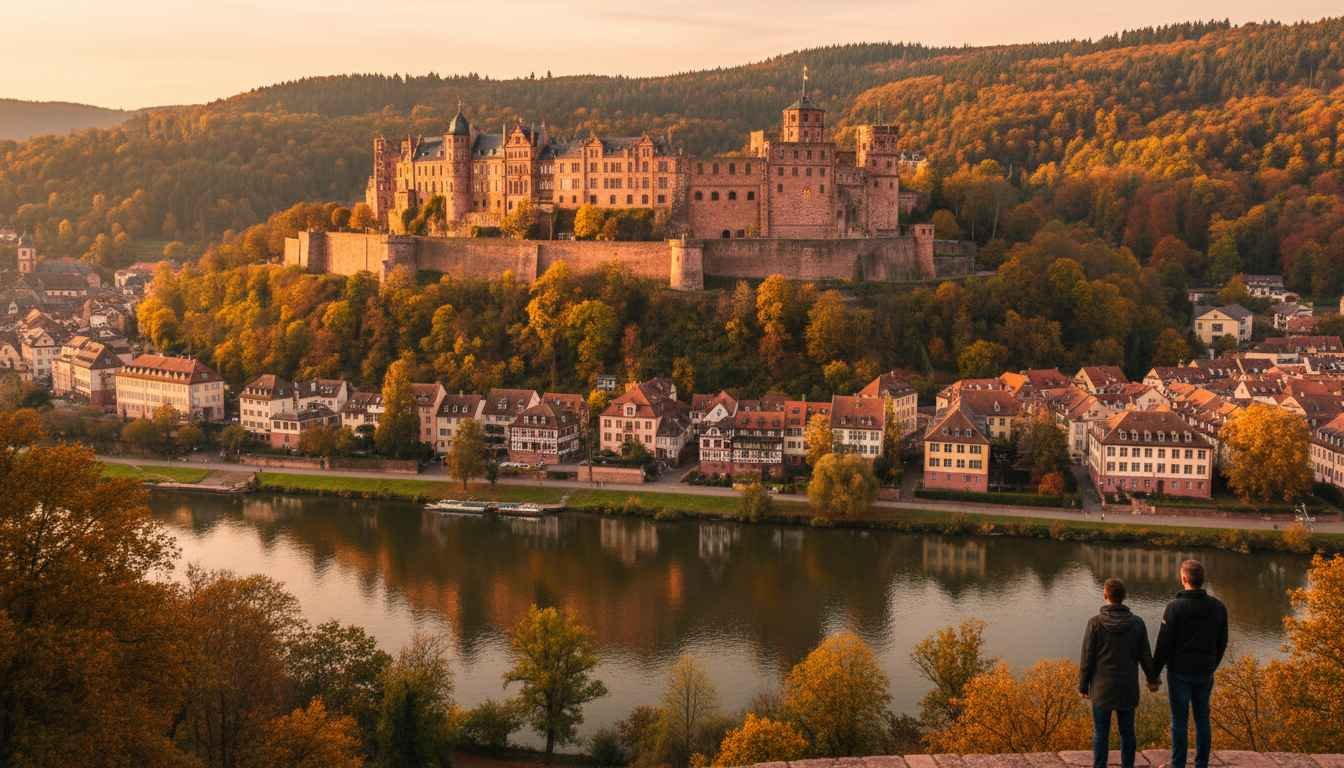
Heidelberg is the postcard image of old Germany: a ruined castle above the Neckar River, a baroque old town, and Germany’s oldest university, founded in 1386. Walk up to the castle for views over the red rooftops, then cross the Old Bridge and wander the lanes of the Altstadt.
Heidelberg works well as a day trip from Frankfurt or Stuttgart, but staying overnight lets you enjoy the old town after the day-trippers leave, when its student pubs and riverside paths feel at their most relaxed.
Tübingen: A Smaller, Quieter University Town
If Heidelberg feels busy, Tübingen offers a similar atmosphere on a smaller scale. Its medieval centre, colourful half-timbered houses, and the Neckar River — where flat-bottomed punts carry visitors in summer — make it one of the state’s most pleasant places to simply wander.
Tübingen is also a good base for exploring the Swabian Alb, the limestone uplands to the south, with its caves, castles, and viewpoints.
Lake Constance: Water, Islands, and Three Countries
Lake Constance, or Bodensee, sits at the meeting point of Germany, Switzerland, and Austria. The German shore includes the island town of Lindau, with its harbour entrance guarded by a lion statue and a lighthouse, and the flower island of Mainau, famous for its gardens.
Cycling around the lake is popular, with flat lakeside paths and ferry crossings that let you shorten the route. It is an easy, family-friendly way to see a different side of the state.
Freiburg: The Black Forest’s Sunny Gateway
Freiburg, in the far southwest, is often described as one of Germany’s sunniest cities. Its medieval minster dominates a compact old town crossed by small water channels called Bächle, and its university atmosphere keeps the streets lively.
Freiburg is also the natural gateway to the southern Black Forest and to day trips into France’s Alsace region, just across the Rhine.
Ulm and the Danube
Ulm, on the Danube, is home to the Ulm Minster, whose tower is the tallest church tower in the world. Climbing it is a workout, but the view across the city and the river is the reward. The old fishermen’s quarter, with its leaning half-timbered houses along narrow canals, is Ulm’s most charming corner.
Wellness and Spa Towns
Baden-Württemberg has a long spa tradition. Baden-Baden, in the northern Black Forest, has been a spa town since Roman times and still offers thermal baths in elegant historic buildings. Smaller spa towns across the state offer a quieter version of the same experience, and they pair well with a hiking or sightseeing trip.
For more ideas across the continent, see our guide to top places to visit in Western Europe, and if you like planning by reviews and rankings, our guide to the best places to visit in Europe explains how to use traveller reviews wisely.
Practical Tips for Baden-Württemberg
- Travel by train where you can. The state’s rail network connects Stuttgart, Heidelberg, Freiburg, and the Black Forest towns well, and regional day tickets can make group travel good value.
- Base yourself in two places. One city base, such as Stuttgart or Freiburg, plus one countryside base in the Black Forest or by Lake Constance, covers most of the state without constant packing.
- Check castle and museum opening days. Some smaller attractions close on Mondays or in winter, so check official sites before a day trip.
- Try the local food. Swabian specialities such as Maultaschen (filled pasta) and Spätzle (egg noodles) appear on menus across the state, alongside wines from the Neckar and Baden wine regions.
FAQ: Visiting Baden-Württemberg
How many days do I need in Baden-Württemberg?
Three to four days cover one city and one countryside area comfortably. A full week lets you add Heidelberg, the Black Forest, and Lake Constance without rushing.
What is the best time to visit?
Late spring through early autumn is best for hiking, lakes, and outdoor sightseeing. December brings Christmas markets in Stuttgart, Heidelberg, and Freiburg, while winter suits spa towns and Black Forest snow walks.
Is Baden-Württemberg good for families?
Yes. Lake Constance cycling, Black Forest lakes and trails, and Stuttgart’s Wilhelma garden all suit children, and distances between stops are short.
Do I need a car?
Not necessarily. Trains and buses cover the main cities and many Black Forest towns, though a car gives more freedom for remote forest villages and the Swabian Alb.
Final Thoughts
Baden-Württemberg works because it does not ask you to choose between city and countryside, history and nature, or a relaxed spa day and an active hike. Pick a city, pick a forest or a lake, leave a day unplanned — and you will understand why so many travellers return to this corner of Germany again and again.