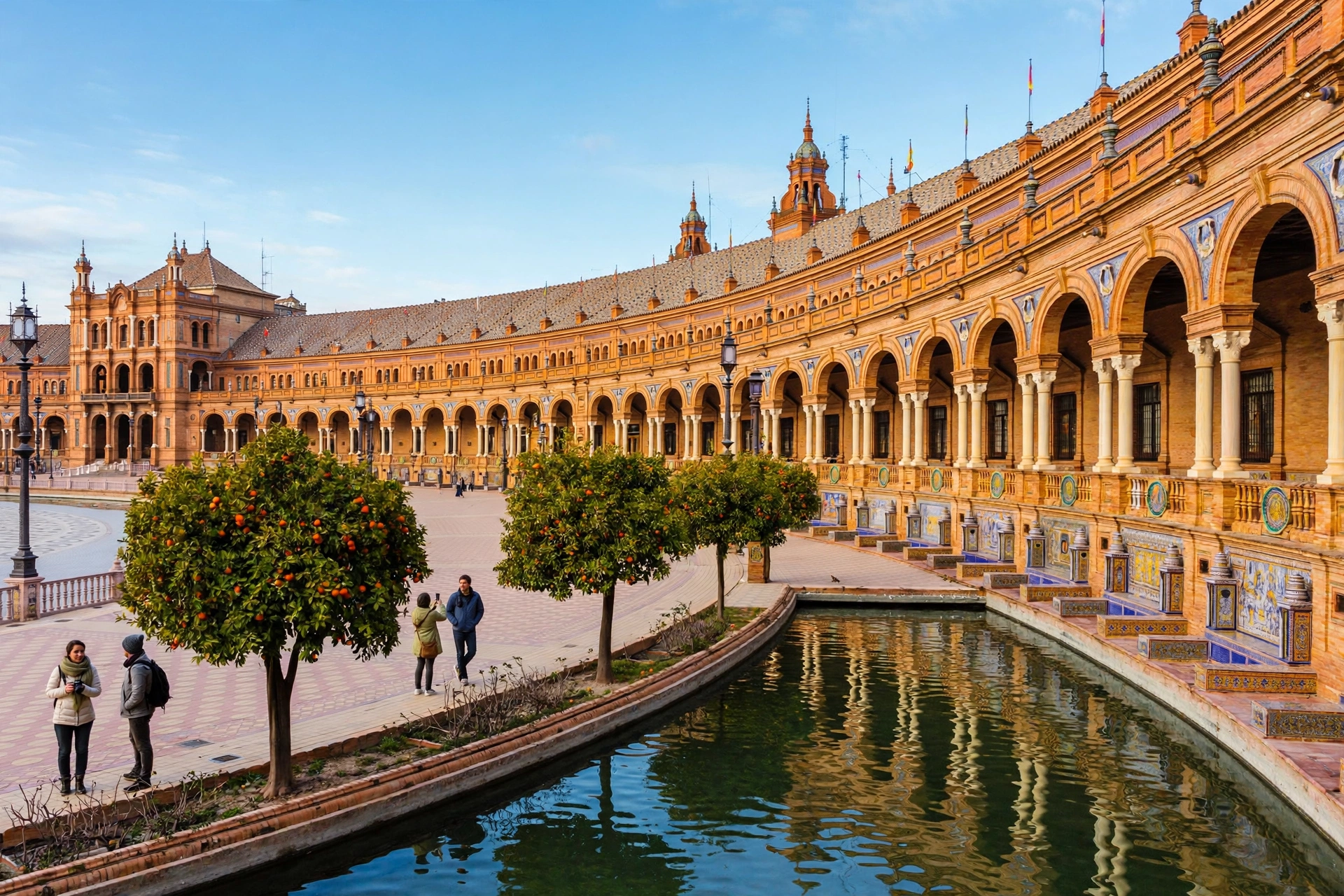
Picture yourself walking through Seville’s Plaza de España on a bright January morning. The orange trees are heavy with fruit, the tiled alcoves glow in soft winter light, and you are wearing a light jacket — not a heavy coat. While much of Europe shivers under grey skies, southern Spain feels like a different season altogether. That is the quiet secret of the best places to visit in Spain in winter: mild weather, thin crowds, lower prices, and the same extraordinary cities, minus the summer rush.
Why Spain Is One of Europe’s Best Winter Destinations
Winter changes the way Spain works for travellers. Hotel rates in cities like Seville, Granada and Madrid commonly drop well below summer levels, queues at the Alhambra and the Sagrada Família shrink to minutes, and restaurant tables that need booking weeks ahead in July are yours for the asking. Daytime temperatures in the south usually sit in the mid-teens Celsius, so sightseeing on foot stays comfortable — you only need a proper coat in the central plateau and the mountains. Winter also brings Spain’s festive season: Christmas markets, the Three Kings parades on 5 January, and carnival season building through February.
1. Seville — Andalusia’s Winter Sun
Seville is the strongest case for a winter trip to Spain. Summer temperatures here regularly pass 40°C, which makes sightseeing exhausting; in winter, daytime highs are usually around 16–18°C, perfect for walking. Start at the Plaza de España, cross the canal by its little bridges, then wander the Santa Cruz quarter’s narrow lanes. The Seville Cathedral and the Giralda tower are far easier to enjoy without the summer queues, and the Alcázar’s gardens are green all year. Evenings are made for tapas bars, where locals outnumber tourists from November to February.
2. Granada — The Alhambra Without the Crowds
Granada in winter gives you the Alhambra at its most atmospheric. Book your Alhambra ticket well ahead — even in winter it can sell out — and go early, when morning light hits the Nasrid Palaces and the Sierra Nevada shows snow on its peaks behind them. The Albaicín quarter, with its whitewashed houses and viewpoints over the palace, is made for slow winter afternoons. Granada is colder than Seville, especially after dark, so pack a warm layer; the reward is a city that feels lived-in rather than performed for visitors. If you ski, the Sierra Nevada resort is about 45 minutes away.
3. Madrid — Museums, Markets and Winter Light
Madrid is Spain’s coldest major city in winter, with daytime temperatures often around 10–12°C and crisp, clear skies. That sharp light suits the city perfectly. The Prado, the Reina Sofía and the Thyssen sit within a short walk of each other, so a cold day becomes a museum day without any regret. Retiro Park is quiet and beautiful in winter, and the San Miguel Market near Plaza Mayor is a warm stop for lunch. Madrid also makes the best base for day trips: Toledo and Segovia are each under an hour away by train, and both are far more pleasant without summer heat or crowds.
4. Barcelona — A Quieter Gaudí Trail
Barcelona never really gets cold — winter days are usually around 14–16°C — but it does get quiet, and that changes everything. The Sagrada Família, Park Güell and Casa Batlló are the same masterpieces, visited at a human pace. Walk the Gothic Quarter in the morning, eat lunch in Gràcia’s neighbourhood squares, and spend the late afternoon on the beachfront promenade, which stays lively even in January. Winter is also calçot season in Catalonia, so look for the grilled spring-onion feasts in local restaurants from January onwards.
5. The Canary Islands — Spain’s Real Winter Beach Escape
If you want actual beach weather in a European winter, the Canary Islands are the answer. Tenerife, Gran Canaria and Lanzarote sit off the coast of Africa, and daytime temperatures are usually around 20–22°C from December to February. Tenerife pairs beaches with the volcanic landscapes of Teide National Park — you can sunbathe at sea level in the morning and look at snow on Mount Teide in the afternoon. The islands are also a strong winter-sun value choice, with frequent flights and plenty of self-catering apartments. For planning your route around the country before you fly on, our guide to the best places to visit in Spain maps out the mainland highlights worth pairing with an island stay.
6. Córdoba — The Mezquita in Golden Winter Light
Córdoba is often skipped on rushed Spain itineraries, and winter is the best time to correct that. The Mezquita-Catedral — a mosque-cathedral unlike anything else in Europe — is at its best in low winter light, and the old Jewish quarter around it is quiet enough to explore slowly. Córdoba is a compact city, easily done in a day from Seville by train, which makes it an easy add-on to an Andalusian winter trip. Come for the architecture, stay for the patios: even in winter, the city’s famous flower-filled courtyards are worth seeking out.
Planning Your Winter Trip to Spain
A little planning goes a long way in winter. Pack layers rather than one heavy coat: southern days are mild but evenings cool down fast, and Madrid and Granada need something warmer. Check opening hours before you go — some smaller attractions and beach-town restaurants shorten their hours outside summer. Book the Alhambra and the Sagrada Família in advance even in winter, and if you want winter sun, fly into the Canary Islands rather than the mainland. Prices are generally lower than summer across hotels and flights, and travelling by train between Seville, Córdoba, Granada and Madrid is fast and comfortable. If you enjoy cold-season travel elsewhere in Europe too, see our guide to the top places to visit in Switzerland in winter for a snowy contrast — and if budget is your main filter, our round-up of the best and cheapest places to visit in Europe will help you stretch the trip further. For official opening hours, events and transport updates, Spain’s official tourism portal, spain.info, is the most reliable place to check before you travel.
FAQ
Is Spain warm in winter?
Southern Spain and the Canary Islands are mild to warm: Seville is usually around 16–18°C by day and the Canaries around 20–22°C. Madrid and the central plateau are colder, often 10–12°C by day, and the north can be wet and chilly.
What is the best month to visit Spain in winter?
December is festive, with Christmas markets and lights; January brings the Three Kings celebrations and the quietest crowds; February is the mildest of the three in the south and the start of carnival season. Any of the three works — pick December for atmosphere or February for weather.
Is winter a good time to visit the Alhambra?
Yes. Winter means smaller crowds and softer light for photography, and the snow-capped Sierra Nevada behind the palace is at its best. You still need to book tickets in advance, as daily visitor numbers are limited all year.
Final Thoughts
Spain in winter is not a compromise — it is a better version of the trip for many travellers. You get the same cities, the same food and the same extraordinary light, with fewer people, lower prices and weather that invites walking instead of hiding from the heat. Start with Seville or Granada, add Madrid or Barcelona if you have the days, and save the Canary Islands for when you want real sunshine. Winter is when Spain feels most like itself.