You know the scene. It is cold and grey outside, the pavements are icy, and your dog is staring at you from the middle of the living room, tail thumping, full of energy. The usual long walk is off the table, and within an hour the pacing starts — then the chewing and the barking at nothing. Winter does not have to mean a cooped-up, frustrated dog. With a few simple games, a little training and some mental exercise, you can keep an indoor dog active, happy and tired out — all without leaving the house.
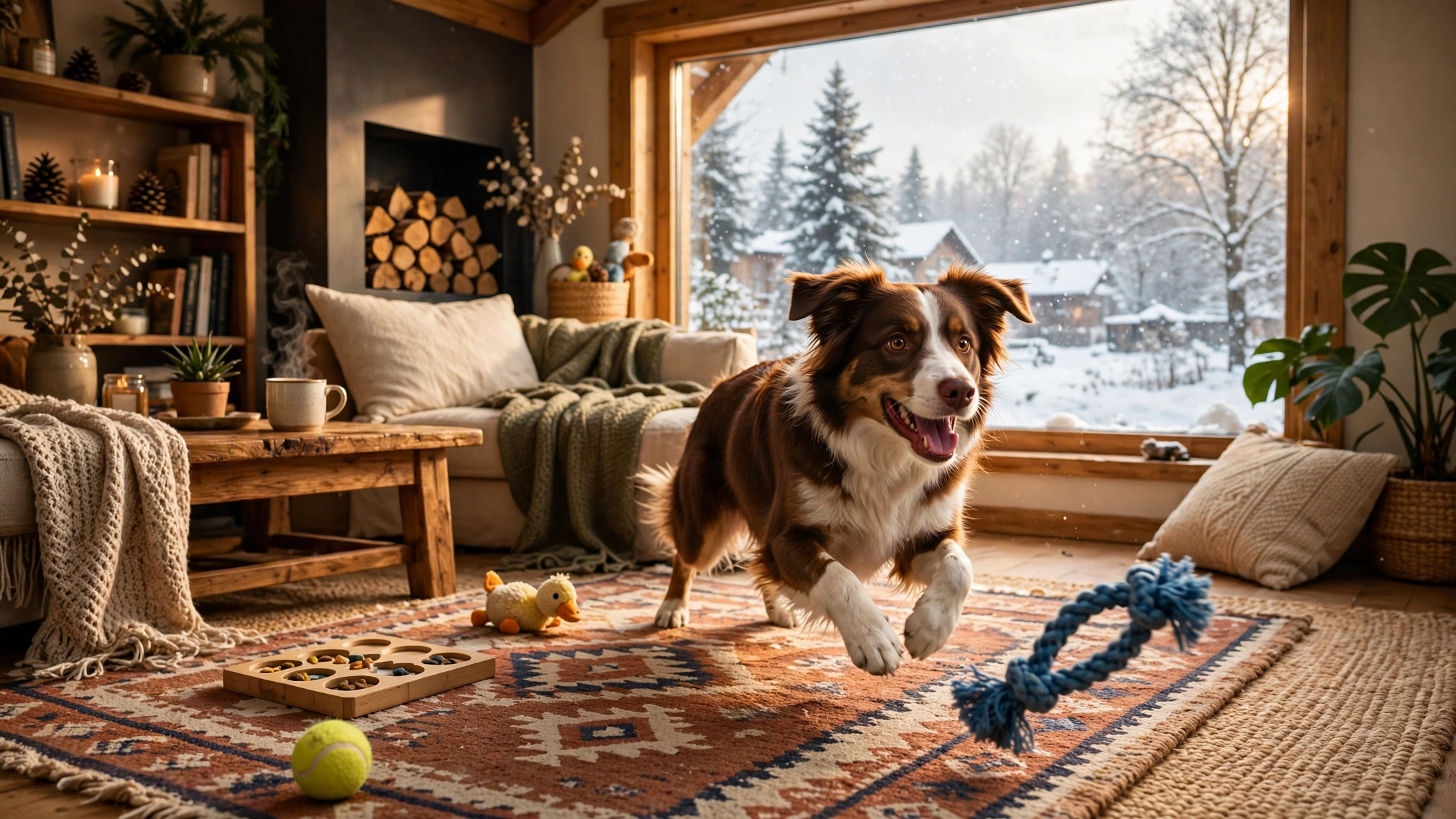
Why Winter Makes Indoor Dogs Restless
In summer, walks, garden time and trips to the park burn off a dog’s energy almost without you noticing. In winter, shorter days, freezing rain and icy paths cut that activity sharply — and the energy does not disappear just because the weather turned. It shows up indoors instead: zoomies around the furniture, chewed shoes and extra barking.
That restlessness is usually a sign of unspent energy, not a behaviour problem. The fix is not one heroic play session but a steady mix of movement and mental work spread through the day. A dog that has played, sniffed, thought and trained is a dog that settles calmly in the evening — and that is entirely achievable indoors.
Build a Simple Daily Indoor Routine
Dogs settle best when they know what is coming. You do not need a strict timetable, but a loose daily shape helps: a short play session in the morning, a training or puzzle session around midday, and a calmer sniffing game in the evening. Two or three sessions of ten to fifteen minutes beat one long, frantic hour, especially for older dogs or smaller breeds. Keep sessions short and stop while your dog is still enjoying it — ending on a high note keeps the game exciting tomorrow, and it protects joints and paws on hard indoor floors.
Indoor Games That Burn Real Energy
Physical play is the fastest way to tire a dog out, and the living room is bigger than you think once the coffee table is pushed back. Try these:
Hide-and-Seek
Ask your dog to sit and stay, then go and hide behind a door or in another room and call them. The searching and running burn plenty of energy, and the game quietly practises recall and patience. Start easy — hide somewhere obvious — and make it harder as your dog gets the idea.
Hallway Fetch and Tug
A hallway or long room makes a perfect fetch lane. Roll a ball gently rather than throwing it hard, and use a soft toy indoors so nothing gets broken. A short game of tug with a rope toy is excellent exercise too, as long as you teach a clear “drop it” so the game stops when you say so.
Stair Games — With Care
If you have stairs, a few slow trips up and down work their muscles well. Only do this with healthy adult dogs — never with puppies, elderly dogs, or dogs with joint problems — and never let them race down. Go slowly: a fall on hard stairs is a real risk.
The “Find It” Game
Scatter a handful of kibble or small treats across a room and say “find it.” Your dog will happily Hoover the floor with their nose, and sniffing is surprisingly tiring. Make it harder over time by hiding treats under cups, behind chair legs, or in different rooms.
Tire the Brain, Not Just the Body
Mental exercise can tire a dog out just as effectively as a run — ideal for winter days when space is limited. Give your dog problems to solve, and the chewed furniture stops.
Puzzle feeders and treat balls turn mealtime into a game — your dog has to nudge, roll or slide parts to earn each bite. A snuffle mat, where kibble is hidden among fabric strips, works the same way and costs very little. Rotate the toys every few days so they stay interesting.
Scent work is another easy win. Hide a treat in one of two boxes, then three, then in different rooms, and let your dog work out which one holds the prize. You can also teach a brand-new trick — “spin,” “shake,” or “touch” with their nose — in five-minute bursts. Learning something new is hard work for a dog, and a few short lessons a day add up to a genuinely tired pet.
Turn Training Into Exercise
Short training sessions combine thinking, moving and bonding. Practise the basics — sit, stay, down, come — then build in something new, like walking calmly to heel around the living room or waiting at a doorway until released. Five minutes, two or three times a day, is plenty.
The American Kennel Club has a useful guide to keeping your dog entertained indoors, including scent games, obedience work and indoor agility ideas. Keep sessions positive and reward generously — training should feel like a game, not a test.
Set Up a Safe Indoor Play Space
Before the games start, make the space safe. Clear a stretch of floor, put a rug or mat down where your dog will turn and stop, and move anything fragile out of reach. Hard floors are slippery, and a dog skidding at speed can strain a leg.
Keep cords, small objects, houseplants and winter decorations secured, and always supervise a new toy — especially anything with stuffing or small parts.
Use Mild Days Well
Winter is not one long freeze. On a milder, dry day, take the chance: a brisk twenty-minute walk or a quick game in the garden gives your dog fresh smells and a change of scenery, and tops up the day’s exercise.
If a longer break is on the cards, look for places that welcome dogs. There are some lovely dog-friendly hotels in Pismo Beach if a coastal trip appeals, and a change of scene in winter can be as refreshing for you as it is for your dog. Just check the weather and pack a warm coat — for both of you.
Know When to Ease Off
Not every dog can, or should, do the same activities. Puppies, senior dogs, and dogs with joint or breathing problems need gentler games — sniffing, slow puzzle feeders and calm training rather than jumping or stair work. Some breeds have their own limits too; common health problems in Boston Terriers, for example, include breathing and joint issues that make hard indoor play a poor idea.
Watch your dog during play. Heavy panting that does not settle, limping, stiffness the next day, or a dog that suddenly refuses a game it normally loves are all signs to slow down. If something seems off, a quick check with your vet is always worth it. The aim is a tired, content dog — never an exhausted or sore one.
FAQ: Keeping an Indoor Dog Active in Winter
How much exercise does an indoor dog need in winter?
There is no single number — it depends on breed, age and health. As a practical guide, aim for two or three short sessions a day, totalling thirty to sixty minutes of play, training and sniffing games, plus short toilet breaks outside. A calm, settled dog in the evening means you are getting it right.
Can mental games really replace a walk?
Not entirely — dogs still need fresh air and real outdoor smells. But on days when a proper walk is impossible, puzzle feeders, scent games and training genuinely tire a dog out and prevent the boredom that causes destructive behaviour. Think of them as a complement to shorter walks, not a full replacement.
What if my dog gets bored of the same indoor games?
Rotate. Put half the toys away for a week, then swap them back — old toys feel new again. Change the game, not just the toy: one day hide-and-seek, the next a new trick, the next a snuffle mat. Novelty is what keeps a dog interested, and you do not need to buy anything new to provide it.
Final Thoughts
Winter asks a little more of dog owners, but not much — a few minutes of play, a puzzle feeder at dinner, and a short training game before bed. Mix movement with thinking, keep sessions short, and respect your dog’s limits. Start tonight with one game, and see how quickly the pacing stops.