Picture yourself standing on a cliff edge at sunrise, a city waking up below you, or a quiet temple courtyard where the only sound is water. The most interesting places in the world to visit are not interesting because a list says so. They are interesting because they change how you see a landscape, a history, or a way of life — and because they suit the kind of traveller you actually are.
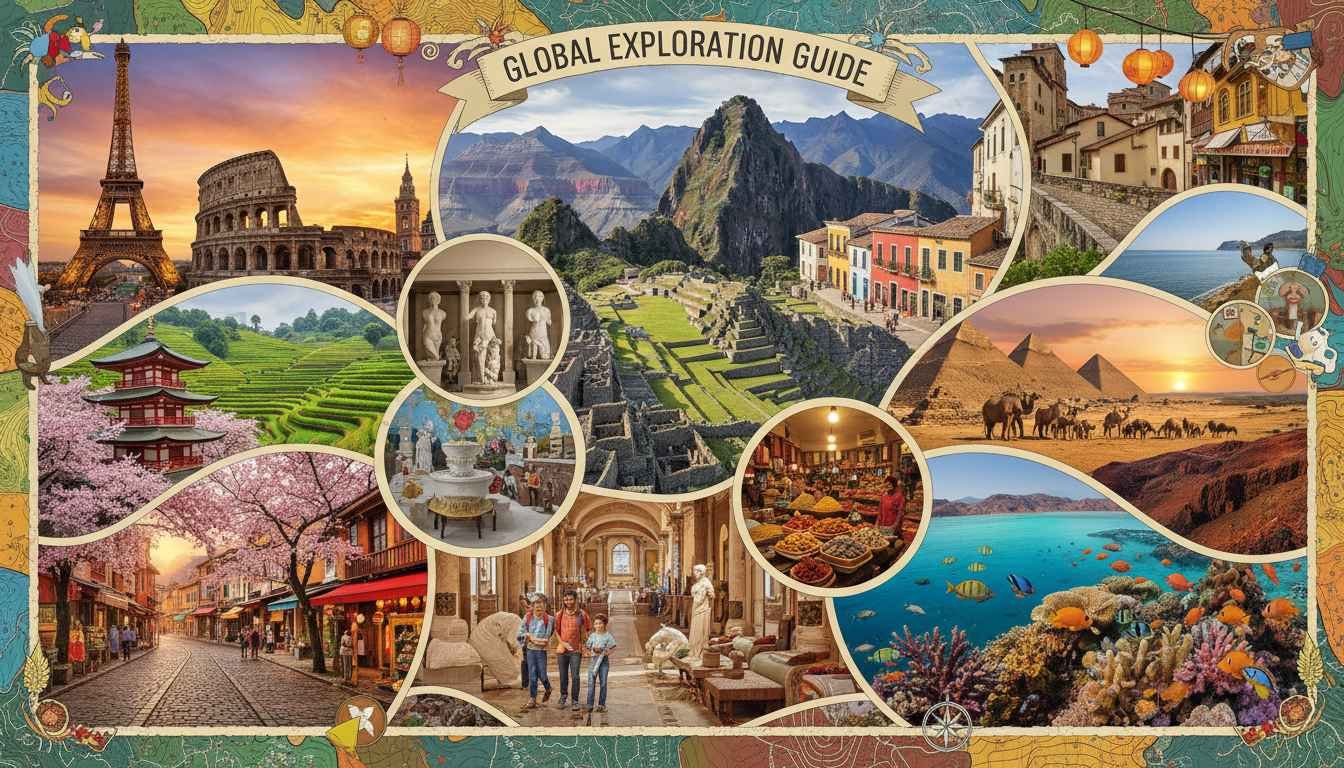
There is no single winner. A desert canyon, a medieval old town, and a street-food market can all be extraordinary, for completely different reasons. This guide groups the world’s most rewarding places by what makes them special, so you can pick the ones that match your trip — not just collect names.
How to Choose From a World of Options
Start with the experience you want, not the destination. Do you want to walk through history, stand in front of nature at its most dramatic, eat your way through a city, or simply slow down somewhere beautiful? A place that is perfect for one traveller can feel flat for another.
Also think about pace. Some of the places below reward a slow stay of several days. Others work as a single unforgettable day within a longer trip. Mixing one big highlight with two quieter stops usually makes a better journey than rushing between famous names.
Natural Wonders That Are Worth the Journey
The Grand Canyon, United States. The scale is the point here. From the rim, the layered rock tells a geological story far older than any city, and a walk even part-way down a trail changes your sense of it completely. The South Rim is the most accessible side for a first visit.
Iguazu Falls, Argentina and Brazil. Where a river drops in a wide, thundering arc across a subtropical gorge, walkways bring you close enough to feel the spray. It is a very different kind of waterfall experience from a single tall drop, and the surrounding national parks add wildlife and forest trails.
Banff and the Canadian Rockies, Canada. Turquoise lakes, glacier-carved valleys, and mountain towns make this one of the easiest dramatic landscapes to explore by car, with short hikes that suit most fitness levels.
The Sahara and Wadi Rum. Desert landscapes in Morocco and Jordan offer a different kind of beauty: vast silence, shifting dunes and rock formations, and night skies far from city light. A guided desert stay is the practical way to experience them safely and respectfully.
Historic Cities That Reward Slow Walking
Rome, Italy. In Rome, ancient ruins, Renaissance churches, and everyday neighbourhood life sit side by side. You can see the Colosseum and the Forum in a morning, then spend the afternoon in a quieter district where Romans themselves eat and shop. That contrast is what makes the city last in memory.
Kyoto, Japan. Kyoto keeps a remarkable number of temples, shrines, gardens, and traditional wooden streets intact. Visit early in the morning for the quietest experience, and pair one famous temple with a neighbourhood walk rather than trying to see everything in a day.
Istanbul, Turkey. Straddling two continents, Istanbul layers Byzantine, Ottoman, and modern life in a single skyline. Its grand mosques, covered bazaar, and ferry rides across the Bosphorus give you history and daily life in the same afternoon.
Petra, Jordan. Approaching the Treasury through the narrow Siq canyon is one of travel’s great reveals. Beyond that famous facade, Petra is a whole carved city of tombs, temples, and desert trails that rewards a full day.
If you want more European ideas in one place, our guide to top places to visit in Western Europe covers Paris, London, Amsterdam, and Barcelona alongside quieter stops like Bruges and the Loire Valley.
Places Where Culture Is the Main Attraction
Marrakech, Morocco. The medina is a working maze of workshops, spice stalls, and courtyards. It can feel overwhelming at first, so go with a loose plan: one landmark, one garden, and plenty of time to sit, watch, and taste.
Mexico City, Mexico. Few cities pack in so much: Aztec ruins, world-class museums, colonial plazas, and neighbourhoods where street food and fine dining sit a few streets apart. It is a city best explored district by district.
Varanasi, India. On the banks of the Ganges, Varanasi is one of the world’s oldest continuously inhabited cities and a centre of Hindu spiritual life. It is intense, moving, and not a place to rush — a guided walk helps first-time visitors understand what they are seeing.
Adventure Landscapes for Active Travellers
Patagonia, Argentina and Chile. Granite towers, glaciers, and windswept steppe make Patagonia a destination for hikers and road-trippers who enjoy remoteness. Base yourself in one area, such as El Chaltén or Torres del Paine, rather than trying to cover the whole region.
New Zealand’s South Island. In a single journey you can move from fjords to alpine lakes to coastal wildlife. The distances are manageable, the walking trails are well marked, and the scenery changes constantly.
Iceland’s Ring Road. Waterfalls, black-sand beaches, geothermal fields, and glacier lagoons line a single loop road. It suits independent travellers who like driving, but weather can change fast, so build in flexible days.
For a different corner of the continent, see our guide to unusual places to visit in Eastern Europe, from Český Krumlov to the Seven Rila Lakes.
Practical Tips for a Trip Like This
- Pick one theme per trip. A nature trip, a history trip, and a food trip each need different pacing. Trying to do all three everywhere leads to exhaustion.
- Book the famous sites early. Timed entry is now common at major attractions. Check the official site before you travel rather than relying on a third-party seller.
- Leave room for the unplanned. Some of the best travel memories come from a neighbourhood you wandered into, not a landmark you queued for.
- Travel in shoulder season where you can. Spring and autumn usually mean milder weather and fewer crowds than peak summer, though the best month varies by destination.
- Respect local rules and customs. Dress codes at religious sites, photography rules, and protected natural areas exist for a reason. A little research before you go goes a long way.
FAQ: Most Interesting Places in the World to Visit
What is the single most interesting place in the world?
There is no honest single answer. It depends on what interests you: natural drama, history, culture, food, or adventure. The places in this guide are chosen because each one is outstanding in its own category.
How many places should I try to see in one trip?
Fewer than you think. Two or three major destinations with time to explore each one will usually feel richer than five places seen in a hurry.
Are famous places always crowded?
Often, yes — but timing helps. Early mornings, weekdays, and shoulder seasons make a real difference, and pairing a famous site with a lesser-known stop nearby balances the day.
Do I need a guide at historic sites?
Not always, but a good local guide transforms places like Petra, Varanasi, or the Roman Forum, where much of the story is not visible in the stones alone.
Final Thoughts
The most interesting places in the world are not a ranking to complete. They are invitations: to stand somewhere ancient, to walk somewhere wild, or to sit in a city and watch a different way of life unfold. Choose the ones that speak to the traveller you are, give them enough time, and let the rest of the list wait for the next journey.