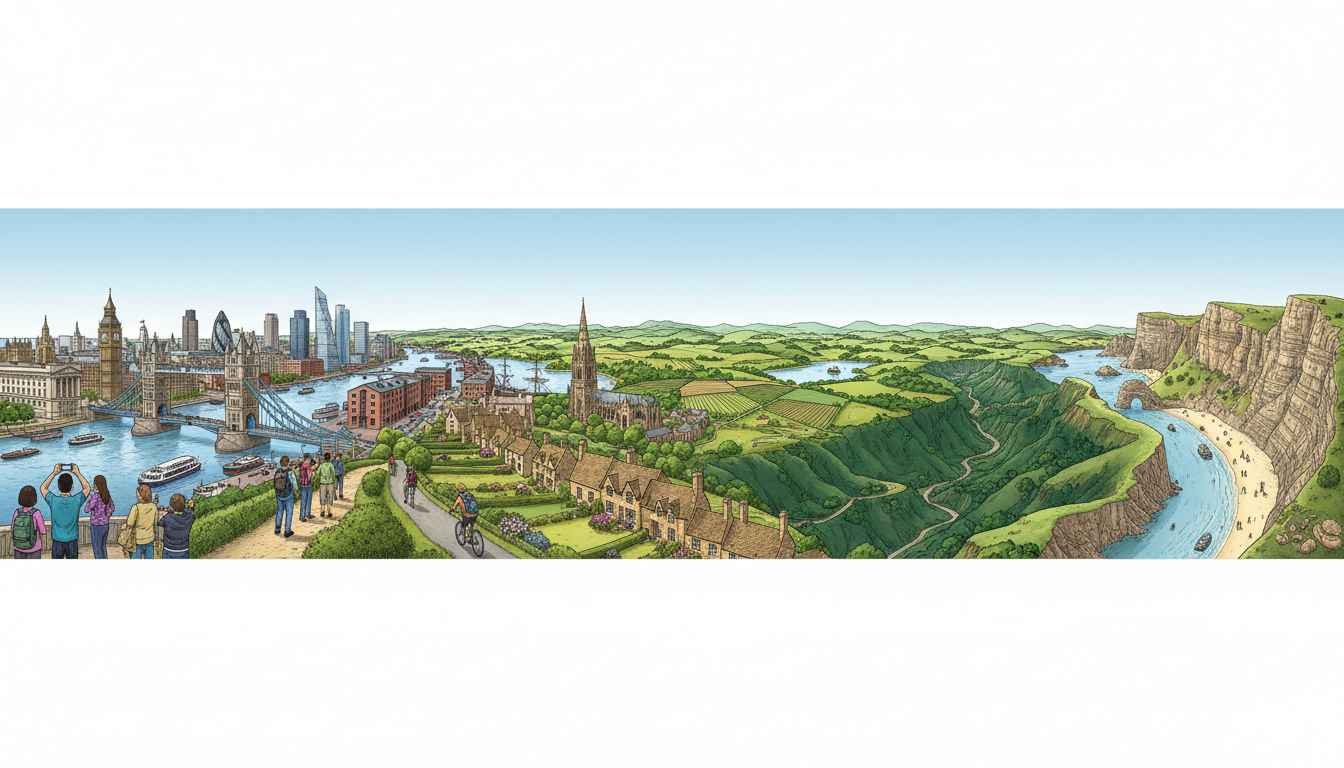
Picture yourself stepping out of a London station on a crisp morning, a paper map in one hand and a day that could go in a dozen directions. That is the happy problem England gives you: a compact country packed with Roman walls, medieval cathedrals, wild national parks and seaside towns, all connected by trains that make multi-stop trips genuinely easy. This guide covers the places that consistently draw visitors, what makes each one worth your time, and how to fit them together without rushing.
London: Start Where the Story Is Thickest
London earns its place at the top of almost any England list because it compresses so much history into walkable neighbourhoods. The British Museum and the National Gallery are free to enter, which makes them easy to dip into even on a short trip. Westminster Abbey and the Tower of London repay a longer visit, especially if you arrive early, while a walk along the South Bank gives you the river, street performers and skyline views in a single afternoon.
If you have a second day, look beyond the centre. Greenwich pairs maritime history with a hilltop view over the city, and Hampstead Heath offers a proper escape into woods and swimming ponds without leaving London. For a winter-season London trip, places to visit near London in winter covers day trips that work well in the colder months.
York and the North: Medieval Streets and Moorland Edges
York is the northern city most first-time visitors remember best. You can walk much of the medieval wall, wander the narrow Shambles, and stand inside York Minster, one of the largest Gothic cathedrals in northern Europe. The city’s layers — Roman, Viking and Norman — are visible in its museums and street plan, which makes it a rewarding stop even without a specialist interest in history.
Further west, the Lake District National Park trades city streets for fells, lakes and literary walks associated with William Wordsworth. Base yourself in Keswick or Ambleside, pick one lake walk rather than trying to see them all, and check local weather before heading onto higher ground. Manchester and Liverpool, meanwhile, offer music, museums and waterfront regeneration, and places to visit in Manchester with family is useful if you are travelling with children.
Oxford, Cambridge and the Cathedral Cities
Oxford and Cambridge are best enjoyed on foot: college courtyards, chapels, libraries and river punting in season. Both are busy, so an early start or a weekday visit makes a real difference. Canterbury, in Kent, is a smaller and quieter cathedral city; its cathedral is a UNESCO World Heritage Site, and its medieval streets are compact enough for a relaxed day trip from London.
For the wider region around the capital, places to visit in the southeast of England covers Canterbury, Dover, Brighton and the South Downs in one route-planning guide.
The Countryside: Cotswolds, Peak District and Cornwall
The Cotswolds, with honey-coloured stone villages such as Bibury and Bourton-on-the-Water, is the classic English countryside postcard — and it is popular, so stay overnight in a smaller village if you want the quiet version. The Peak District, reachable from Manchester or Sheffield, is the more rugged alternative, with moorland walks, limestone dales and Chatsworth House.
Cornwall, at the far south-west, is a longer journey but a different world: fishing harbours, cliff paths, the Eden Project and beaches that genuinely reward a slow itinerary. If you are driving, plan one base and day-trip from it rather than moving every night. The Jurassic Coast in Dorset, also a UNESCO World Heritage Site, is the best choice if geology and coastal walking are your priority.
How to Plan Your England Trip
Spring and early autumn generally give the most comfortable walking weather and thinner crowds than high summer. Trains connect most of the places above, and advance tickets are usually cheaper than buying on the day — check the operator’s own site for the route you need. If you are visiting several paid attractions, compare a heritage membership or multi-attraction pass against your actual itinerary before buying; passes only save money if you visit enough included sites.
One honest caution: no single list can name a definitive “most popular” ranking, because visitor numbers shift year to year and different surveys count different things. Treat this guide as a starting shortlist of places that consistently appear at the top, then shape it around your own interests.
FAQ
How many days do I need for England? A week covers London plus two or three other bases comfortably. Two weeks allows a proper north-to-south route with countryside stops.
Is England good for families? Yes — free national museums in London, heritage railways, national parks and coastal towns give plenty of options for children of all ages.
Do I need a car? Not for the cities, which are well served by train. A car helps in the Cotswolds, the Lake District and Cornwall, where buses are thinner.
Final Thoughts
England rewards travellers who mix one big city with one quieter landscape. Start in London, add York or the Cotswolds, and leave one day unplanned — that is usually the day you remember best.