Summer is the most forgiving season to see Russia: long northern evenings, parks and river embankments in full use, and the country’s great cities at their most walkable. It is also a vast country, so a first summer trip works best when you choose a region rather than trying to cross it all. The places below cover the classic summer route, from Moscow and St. Petersburg to the Black Sea coast and Lake Baikal, with the practical notes you need before you plan.
Before You Plan: Travel Advice and Visas
Check your own government’s current travel advice for Russia before booking anything, and confirm visa requirements well in advance, as both can change and most visitors need a visa arranged ahead of travel. Payment cards issued abroad may not work reliably in Russia, so research current payment options and carry a realistic backup plan. These practicalities matter more than usual here, and sorting them out first will save you trouble later.
Moscow
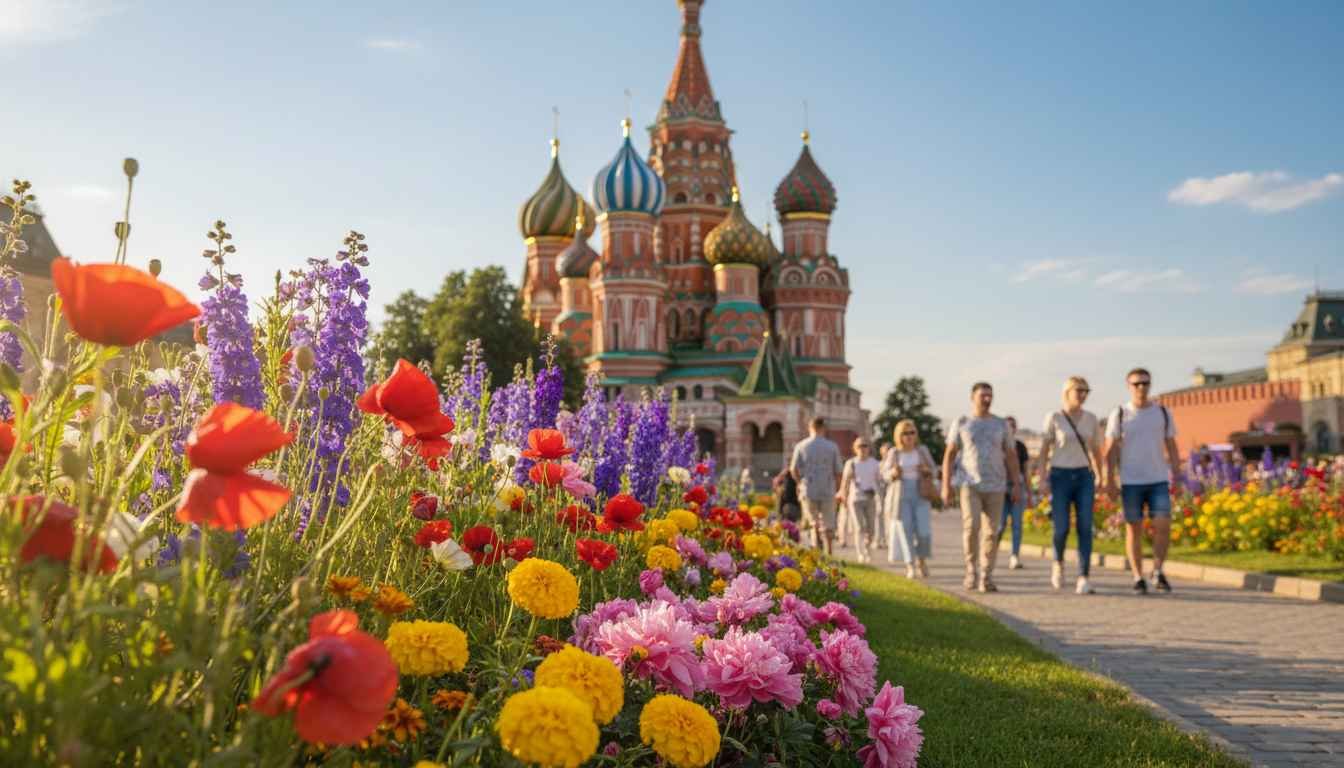
Moscow in summer is best explored on foot and by metro. Red Square, St. Basil’s Cathedral, and the Kremlin anchor the centre, while Gorky Park, the embankments along the Moskva River, and the leafy boulevards give the city its summer character. The metro itself is worth a ride for its decorated stations, and the city’s museums and theatres are at their easiest to visit when the days are long. Allow at least three days: Moscow is large, and its sights are spread out.
St. Petersburg and the White Nights
St. Petersburg is Russia’s most beautiful summer city, built on canals and islands around the Hermitage Museum and the Winter Palace. In June, the White Nights bring twilight that barely darkens, and the city fills with festivals and late-evening strolls along the Neva. Take a canal boat ride for an overview, visit the Hermitage in a planned half-day rather than trying to see it all, and spend time in the Summer Garden and on Vasilievsky Island for a quieter side of the city. The high-speed train between Moscow and St. Petersburg makes combining the two cities straightforward.
The Golden Ring
The Golden Ring is a loop of historic towns northeast of Moscow, including Vladimir, Suzdal, and Sergiev Posad. Suzdal is the highlight for many visitors: white-walled monasteries, wooden houses, and open meadows that feel far removed from the capital, even though it is a few hours away. The towns are small, so one or two nights, or even a long day trip from Moscow, is enough to get a sense of older Russian architecture and church art.
Kazan
Kazan, on the Volga, is worth the detour for its mix of Russian and Tatar culture. The Kazan Kremlin, a UNESCO-listed site, contains both an Orthodox cathedral and the Kul Sharif Mosque, and the pedestrian Bauman Street and the Volga embankment make for pleasant summer evenings. Kazan’s food scene, with Tatar dishes such as echpochmak pastries, is a good reason to linger. It is an overnight train or short flight from Moscow.
Lake Baikal, Siberia
Lake Baikal, the world’s deepest freshwater lake, is a summer destination for hiking, boat trips, and village stays. Most visitors base themselves in Listvyanka or on Olkhon Island, reached via Irkutsk, a historic Siberian city sometimes called the Paris of Siberia for its wooden houses and Decembrist history. Summer brings warm days and accessible trails, but distances are long and transport needs planning, so treat Baikal as a trip in its own right rather than a quick add-on to Moscow.
Sochi and the Black Sea Coast
Sochi, on the Black Sea beneath the Caucasus foothills, combines beaches with mountain scenery. Summer visitors swim, walk the seafront promenade, and take the cable car up into the hills above the resort, while the nearby Caucasus nature areas offer hiking. Sochi is warmer and more humid than the northern cities, so it suits travellers who want a beach element in their Russian summer. It is a flight from Moscow or St. Petersburg, not a day trip.
Planning a Russian Summer
June to August is the main season: expect warm weather in Moscow and the south, cooler and changeable weather in St. Petersburg and Siberia, and mosquitoes in forested and lakeside areas, so pack repellent. Russian is the everyday language outside major hotels and museums, so learning the Cyrillic alphabet and a few phrases helps a great deal, even in the big cities. Trains are comfortable and extensive, but book the popular Moscow to St. Petersburg and overnight routes early in summer. For a broader sense of the region, Eastern Europe’s less-visited destinations and Western Europe’s classic cities are useful comparisons when you are weighing where to travel next.
FAQ
What is the best month to visit Russia in summer?
June is best for St. Petersburg’s White Nights, July and August are warmest across most of the country, and late August can be quieter in the cities. Your choice depends on whether long daylight, warmth, or fewer crowds matter most.
How long should a first trip to Russia take?
A week covers Moscow and St. Petersburg comfortably. Add a second week if you want the Golden Ring, Kazan, or a Black Sea stay, and treat Lake Baikal as a separate journey of at least several days.
Is summer a good time for families visiting Russia?
Yes, in the sense that parks, river trips, and outdoor attractions are at their best, but long distances and the visa and payment planning above mean family trips need more preparation than a typical European city break.
Final Thoughts
Russia in summer rewards travellers who plan carefully and then slow down: a few days each in Moscow and St. Petersburg, one historic town or one natural region, and evenings spent outdoors while the light lasts. Get the practicalities sorted early, choose a region that fits your time, and you will see the country at its most open and enjoyable.