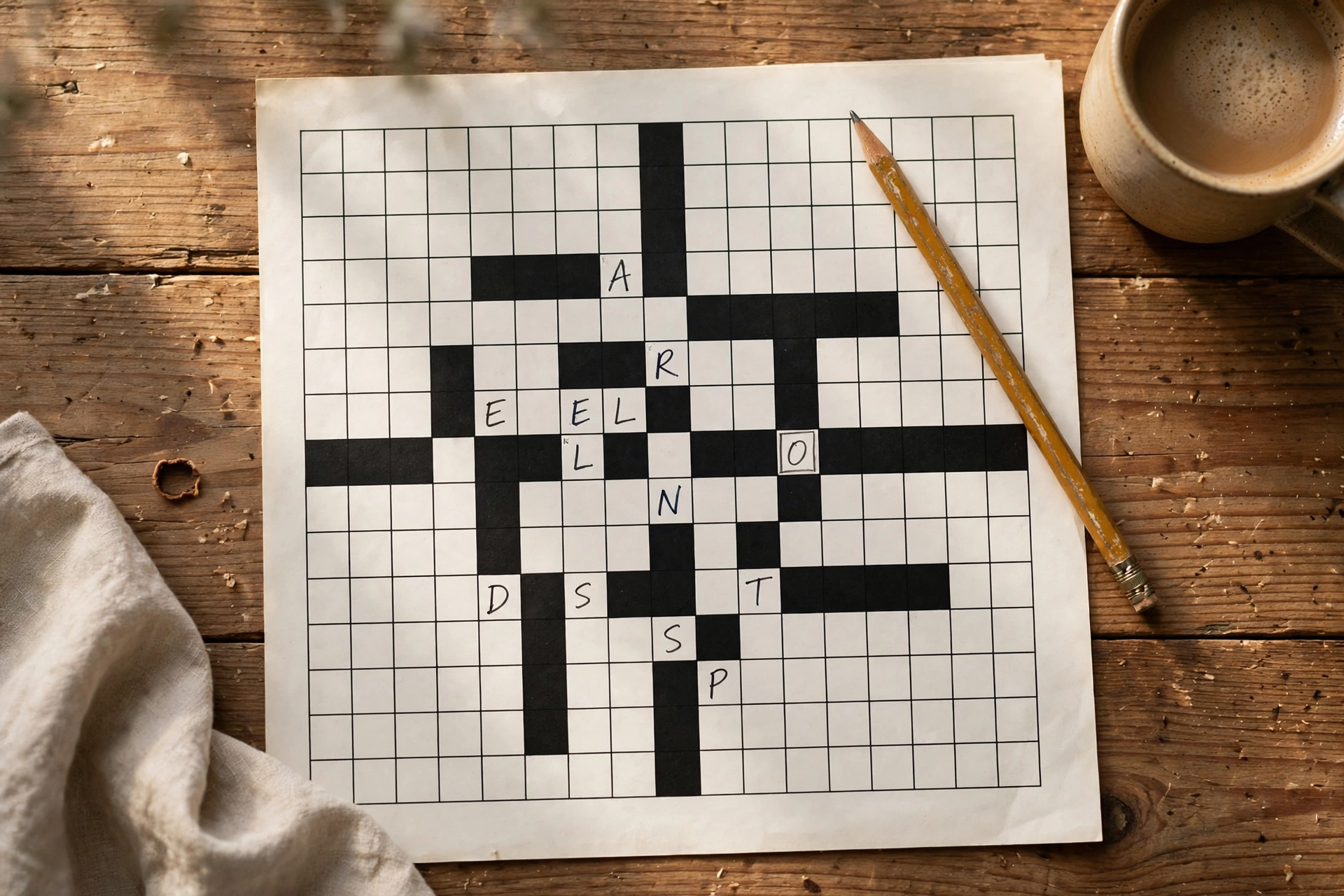
You are halfway through the morning crossword, coffee cooling beside you, when a short clue stops you in your tracks: “Keeps entertained.” Six empty squares. The crossing letters give you an A at the start and an S at the end, and still nothing comes. It looks too simple to be hard, which is exactly why it sticks. This guide gives you the answer, explains why the clue appears in so many published puzzles, and shows you how to crack clues like it.
The Short Answer: “Keeps Entertained” Means AMUSES
The answer most often wanted for the clue “keeps entertained” is AMUSES, a six-letter word that fits the clue exactly. The clue is a plain definition: to keep someone entertained is to amuse them, and the clue’s verb form points straight at the matching form in the answer. “Keeps” is third-person singular, so the answer ends in S, just as “amuses” does.
This is not a one-off clue. It has appeared in major daily puzzles, including as 94 Down in the LA Times crossword of February 2, 2025 and 96 Down in the Newsday crossword of March 9, 2025, and it has also turned up in Universal crosswords. Crossword answer listings for AMUSES record the same clue across several of these appearances, which is why regular solvers start to recognise it on sight.
Always count the squares first, though. A five-letter slot calls for AMUSE instead, and a longer slot may want a different synonym altogether. The clue stays the same; the grid decides which form fits.
Why This Clue Keeps Showing Up
Crossword constructors favour everyday words with flexible letter patterns, and AMUSES is useful fill: common letters, a familiar meaning, and an ending that links neatly with crossing answers. The clue is a straight definition with no wordplay to untangle, so it rewards vocabulary rather than trickery and gives beginners a fair foothold in a corner of the grid.
That simplicity is part of the design. Every grid mixes gentle definition clues with harder wordplay, and the easy ones keep the puzzle moving while the crossings build. Meeting a familiar clue is not a flaw in the puzzle; recognising it is a skill built with every puzzle finished.
How to Solve Clues Like “Keeps Entertained”
A short definition clue is the best place to practise a steady routine. Work through these steps before you guess, and the answer usually surfaces on its own.
Count the squares. The letter count is the first filter. Six squares rules out ENTERTAINS and DELIGHTS, both too long, and points you toward six-letter synonyms such as AMUSES. Write the count beside the clue if it helps you hold it in mind.
Match the grammar. The clue and the answer agree in tense and number. “Keeps” is present tense, third-person singular, so the answer is a verb in the same form: “kept entertained” would point to AMUSED, and “keeping entertained” to AMUSING. This one habit alone clears up a large share of short clues.
List synonyms, then test them. For “keeps entertained,” the candidates are amuses, delights, charms, and pleases. Test each one against the letter count and the crossing letters you already have; the right word tends to click once two or three crossings agree with it.
Let the crossings decide. If AMUSES conflicts with a crossing answer you trust, trust the crossing and look again. A wrong guess early on can block a whole corner, while one confirmed crossing letter often turns a stubborn clue into an easy one. Themed puzzles add another layer, since the theme can steer the answer, and this guide to solving the Fashion NYT crossword shows how theme awareness changes the way you read each clue.
Keep it light until it locks. Pencil in a likely answer and move on. Returning after filling the surrounding squares is often all it takes, because fresh crossing letters do the work your memory could not.
Clue Patterns That Make the Next Puzzle Easier
Once you see how “keeps entertained” works, you start spotting the same patterns everywhere in the grid. A few of the most common ones are worth learning by name.
Straight definitions. Most short clues are plain definitions, exactly like this one: the answer is a synonym of the clue, matched in form and length. If the clue feels too easy, that is usually a sign it is a definition, not a trick.
Tense and number agreement. Crossword clues almost always match their answers grammatically. A plural clue wants a plural answer, a past-tense clue wants a past-tense answer, and an “-ing” clue wants an “-ing” answer. Checking the ending first narrows the field fast.
Abbreviation signals. When a clue contains an abbreviation, the answer is usually abbreviated too: “Rte. info” expects something short, while a fully spelled-out clue expects a full word.
Question-mark wordplay. A question mark at the end of a clue warns that the clue is playful rather than literal. Without it, “keeps entertained” is a definition; with one, the same words might be a pun. That single mark changes how you should read the clue.
The same habit pays off with other single-word definition clues. For example, this breakdown of how the clue “fashioned” is unraveled walks through another everyday word hiding in plain sight, and working through it uses exactly the steps above: count, match the grammar, list synonyms, and check the crossings.
Making Crosswords Part of Your Day
The pleasure of a clue like “keeps entertained” is not only the answer. It is the small daily ritual around it: the same chair, the same pencil, ten unhurried minutes before the day fills up. A short daily puzzle fits a commute, a lunch break, or a quiet evening, and asks for nothing more than attention and a willingness to be stuck for a moment.
If you are starting out, begin with the easier puzzles of the week and work upward as confidence grows. Early-week puzzles lean on straightforward definitions like this one, while later in the week the wordplay thickens. Solving with a partner helps too: one of you knows the history answers, the other the pop-culture ones.
Paper or screen is a matter of taste. Paper lets you scribble in the margins; an app checks letters as you go and keeps a streak that brings you back tomorrow. Either way, the habit matters more than the format: a little time with the grid each day builds the vocabulary of common answers that turns a baffling clue into a familiar one.
FAQ:
What is the answer to “keeps entertained” in a crossword?
In most published puzzles, the answer is AMUSES, with six letters. It appeared with that answer in the LA Times crossword of February 2, 2025 and the Newsday crossword of March 9, 2025.
Why does the same clue appear in different puzzles?
Constructors draw on a shared pool of clean, common words, and a straightforward definition clue for a useful word like AMUSES fits many grids. Recognising a repeated clue is part of becoming a faster solver.
What if AMUSES does not fit the grid?
Check the letter count first. A five-letter slot wants AMUSE, and other grids may use a different synonym, such as DELIGHTS or CHARMS, if the length allows. Let the crossing letters decide: if a crossing you trust conflicts with AMUSES, the crossing is usually right.
How can a solver get better at crossword clues?
Solve a little every day, starting with easier puzzles, and pay attention to how clues are built: count the squares, match the tense and number, and list synonyms before guessing. Over time the common answers and the patterns behind them become familiar, and the clues that once stopped you start to feel easy.
Final Thoughts
“Keeps entertained” looks like a throwaway clue, and that is the point. It teaches the whole game in six letters: read the clue literally, match its grammar, count the squares, and let the crossings confirm the guess. The answer is AMUSES, and the next time it appears, you will know it before the pencil reaches the grid. That small moment of recognition is what keeps solvers coming back, one clue and one finished puzzle at a time. Keep noticing the patterns, and the puzzles that once felt out of reach will start to open up square by square.