You turn the key on a cold morning and wonder whether that small sticker on the windscreen is still telling the truth. The car starts fine and sounds fine, but you cannot quite remember when it was last serviced, and you do not want to find out the hard way that something was quietly wearing out. If that sounds familiar, you are asking the right question — just not quite in the way most people ask it.
There is no single number that answers how often you should service your car. The honest answer is: follow your car's own service schedule, and adjust it for how you actually drive. Your owner's manual is the authority, because intervals differ by make, model, engine, age, and oil type. What follows is a practical way to read that schedule and know when to bring a service forward.

The Short Answer: Follow Your Manual, Not a Single Number
Many drivers look for one rule — once a year, or every 10,000 miles — and then feel safe. That is a useful starting point, but not a complete answer. Some cars need oil services more often, others are designed for longer gaps, and some jobs, like brake and tyre checks, are about condition rather than a fixed date. A car that sits unused for months still ages: fluids degrade, batteries lose charge, and tyres can develop flat spots.
A better habit is to treat servicing as two things: the scheduled service your manufacturer sets out (a time interval, a mileage interval, or whichever comes first), and the condition check — the regular look at brakes, tyres, lights, and fluid levels that catches problems between services.
Find the schedule in your owner's manual or your manufacturer's app. Note the interval for normal use, and whether the manual lists a separate, shorter interval for severe use. That second figure matters more than most drivers realise.
The Intervals That Actually Matter
Not every part ages at the same rate, so a service is really a bundle of jobs with different rhythms. The table below is a general guide only — your manual overrides it every time.
| Job | Typical rhythm | Why it matters |
|---|---|---|
| Engine oil and oil filter | Often every 5,000 to 10,000 miles, or about once a year | Old oil lubricates less well |
| Air filter | Often every 15,000 to 30,000 miles, sooner in dust | A clogged filter hurts performance and fuel economy |
| Cabin filter | Often about once a year | It affects the air inside the car |
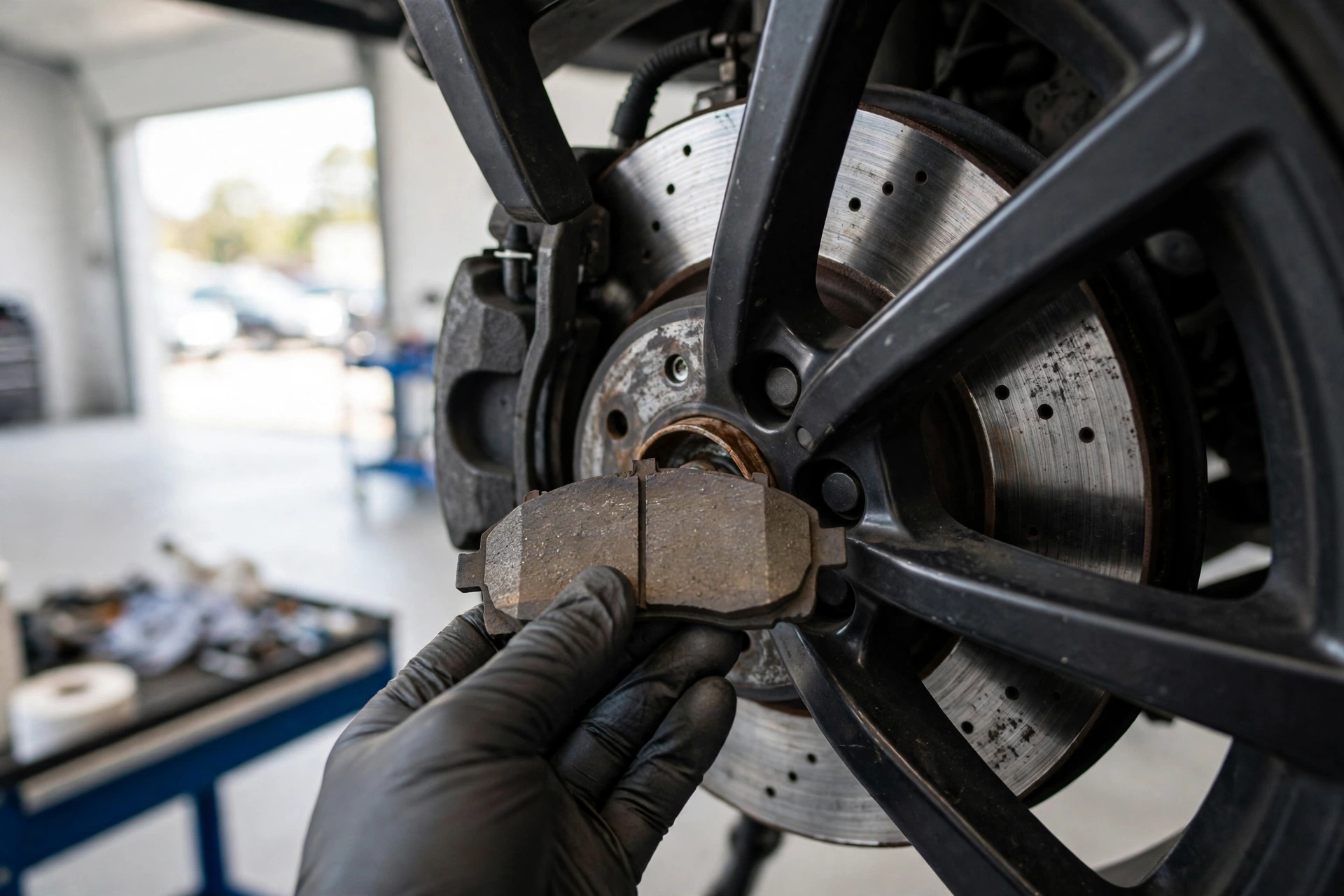
| Brake pads and discs | Checked at each service; wear rates vary widely | Braking is a safety issue, not a convenience |
| Tyres, including the spare | Pressure monthly; tread checked at each service | Worn tyres affect grip and braking |
| Coolant, brake fluid, and transmission fluid | Checked at each service; replacement varies by car | Fluids break down with heat and age |
| Battery | Tested at each service, especially after three to five years | A weak battery often fails without warning |
| Belts and hoses | Inspected at each service; replaced when cracked or per the manual | A failure can stop the car or overheat the engine |
If your last service report lists items as "advisory" — brake pads getting thin, say, or a tyre near its wear limit — do not file it away. An advisory means the next service may already be too late for that part. Ask how much life is left and what it would cost to fix now.
Driving Habits That Shorten the Interval
Your manual may describe two schedules: normal and severe. Severe does not mean off-road driving or racing. It usually means everyday driving many people do without thinking about it.
You probably fall into the shorter-interval group if most trips are short, with the engine rarely reaching full operating temperature; if you spend a lot of time in stop-start traffic; if you regularly tow or carry heavy loads; or if you drive on dusty, unpaved, or very hot roads. Short trips are especially hard on oil, because moisture and fuel can build up in oil that never gets hot enough to burn off.
If any of that fits you, use the shorter interval in your manual, or ask your garage to confirm which schedule applies to your driving. That one conversation prevents the most common servicing mistake: following the easy number instead of the right one.
Warning Signs You Should Not Wait Out
A service schedule assumes nothing is going wrong. If something changes, do not wait. Book a check if you notice any of these:
- A warning light that stays on, especially for oil pressure, brakes, engine temperature, or the battery
- Brakes that squeal, grind, vibrate, or feel soft or spongy
- Steering that pulls to one side, vibrates, or feels vague
- New noises: knocking, rattling, hissing, or a belt that squeals on startup
- Fluid leaks under the car, or fluid levels that keep dropping
- An engine that overheats, idles roughly, or is noticeably harder to start
- Tyres that wear unevenly, or a tyre that keeps losing pressure
Some are minor; some are not, and you cannot always tell from the driver's seat. If a warning light relates to oil pressure or overheating, stop safely and call for advice rather than driving on.
What a Routine Service Usually Covers
A basic service is not just an oil change, though oil is usually the centrepiece. A typical visit includes fresh oil and a new filter, fluid checks and top-ups, and inspections of brakes, tyres, lights, wipers, belts, hoses, and the battery. A fuller service may add air and cabin filters, spark plugs at longer intervals, and more detailed brake and suspension checks.
Before you hand over the keys, ask what is included and whether anything the garage recommends replacing is urgent, due soon, or simply worth watching. Keep the invoice and service report: a clear history protects your car's value and helps your next garage spot patterns.
Before a Long Trip, Service Early
If a long journey is coming up and your service is due within the next month or two, bring it forward rather than squeezing the trip in first. A pre-trip check should cover tyres and pressures, brakes, coolant, oil level, lights, wipers, and the battery, plus anything already flagged as advisory — far cheaper and calmer than a breakdown far from home.
A well-timed service belongs on your trip checklist alongside fuel and accommodation. Our guide on how to plan a road trip on a budget in the USA covers the planning side — budgeting, cheap stays, and fuel savings — while this article covers the mechanical side.
Choosing a Garage and Keeping Records
You do not need a main dealer for every service, but you do need a garage you trust, that uses the correct oil specification for your car, and that records what it did. Ask friends for recommendations, read recent reviews critically, and be wary of any garage that pressures you into work it cannot explain. A profile of Oscars Auto Service describes a workshop that treats maintenance as precision work rather than a quick turnaround — the standard you should expect wherever you go. Keep a simple record for each visit: date, mileage, what was done, and what was flagged for next time.
Frequently Asked Questions
Does a car that is rarely driven still need servicing?
Yes, usually once a year at least. Oil, coolant, and brake fluid age even when the car sits still, and tyres and batteries deteriorate too. If your car is driven very little, the time-based interval matters more than the mileage one.
Is an oil change the same as a service?
No. An oil change is one job inside a service. A service also inspects brakes, tyres, fluids, lights, belts, and other safety-related parts. Skipping the inspection means problems can go unnoticed even with fresh oil.
Should I service my car early if I drive in harsh conditions?
If your driving matches your manual's severe-use description — mostly short trips, heavy traffic, towing, or dusty roads — yes, follow the shorter interval. When in doubt, ask your garage which schedule fits your driving.
Final Thoughts
Servicing is about catching small, cheap problems before they become large, expensive ones, and keeping the safety systems you rely on — brakes, tyres, steering — in good working order. Find your manual's interval, adjust it honestly for how you drive, act on advisories, and never ignore a warning sign just because the next service is not due yet.