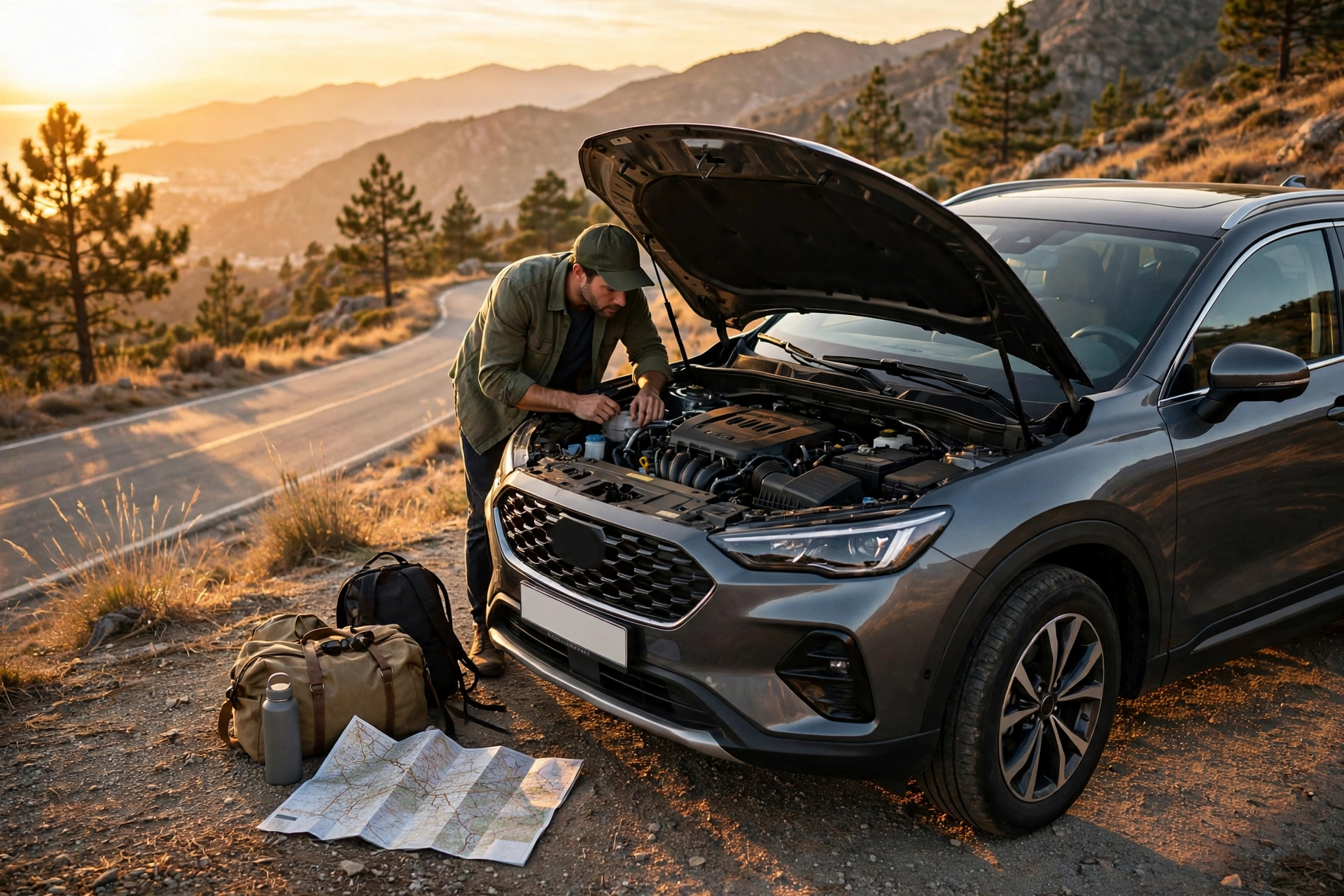
You are standing in the driveway with the bags packed, the route already on your phone, and everyone ready to go — except for the one question you have not answered yet. Is the car actually ready for several hundred kilometres of motorway, hills, heat, and unfamiliar roads? A long trip does not ask anything new of a car. It simply asks for everything at once, for hours on end, often with a full load. That is why small problems that go unnoticed around town — a soft tyre, low fluid, a tired battery — tend to show up far from home.
Run this checklist a few days before you leave, so there is time to fix what you find, and keep it for the quick checks on the road.
Start With the Service Question
Before you touch a single fluid, ask when the car was last serviced and what is due next. A service that is overdue, or one that will fall due in the middle of your trip, is better done before you leave. Check the service book or the windscreen sticker, and look at both mileage and date — whichever comes first matters.
If the car is close to a service interval, get it done early and mention the trip, so the garage can pay extra attention to this list. Our guide on how often you should service your car explains how intervals work and why a condition check between services is often more useful than a date alone. If a warning light is already on, get the cause checked before a long journey, even if the car still feels normal.
Tyres: The Four Things Between You and the Road
Start with pressure. Check all four tyres — plus the spare, if you have one — when they are cold, and inflate them to the pressure recommended for a loaded car. You will find that figure on the driver’s door frame, inside the fuel flap, or in the owner’s manual; do not guess it, and do not use the maximum pressure printed on the tyre sidewall, which is not the same thing. A loaded car often needs a higher pressure than the same car running light around town.
Next, look at tread and condition: cuts, bulges, cracks, objects in the tread, and uneven wear, which can point to a pressure or alignment problem. If tread looks low or wear is uneven, have it assessed before you leave.
Finally, know what you would do with a flat: check the spare is inflated, or the repair kit is complete and you know how to use it, with jack and wheel brace in the car.
Under the Bonnet: Fluids, Belts and Hoses
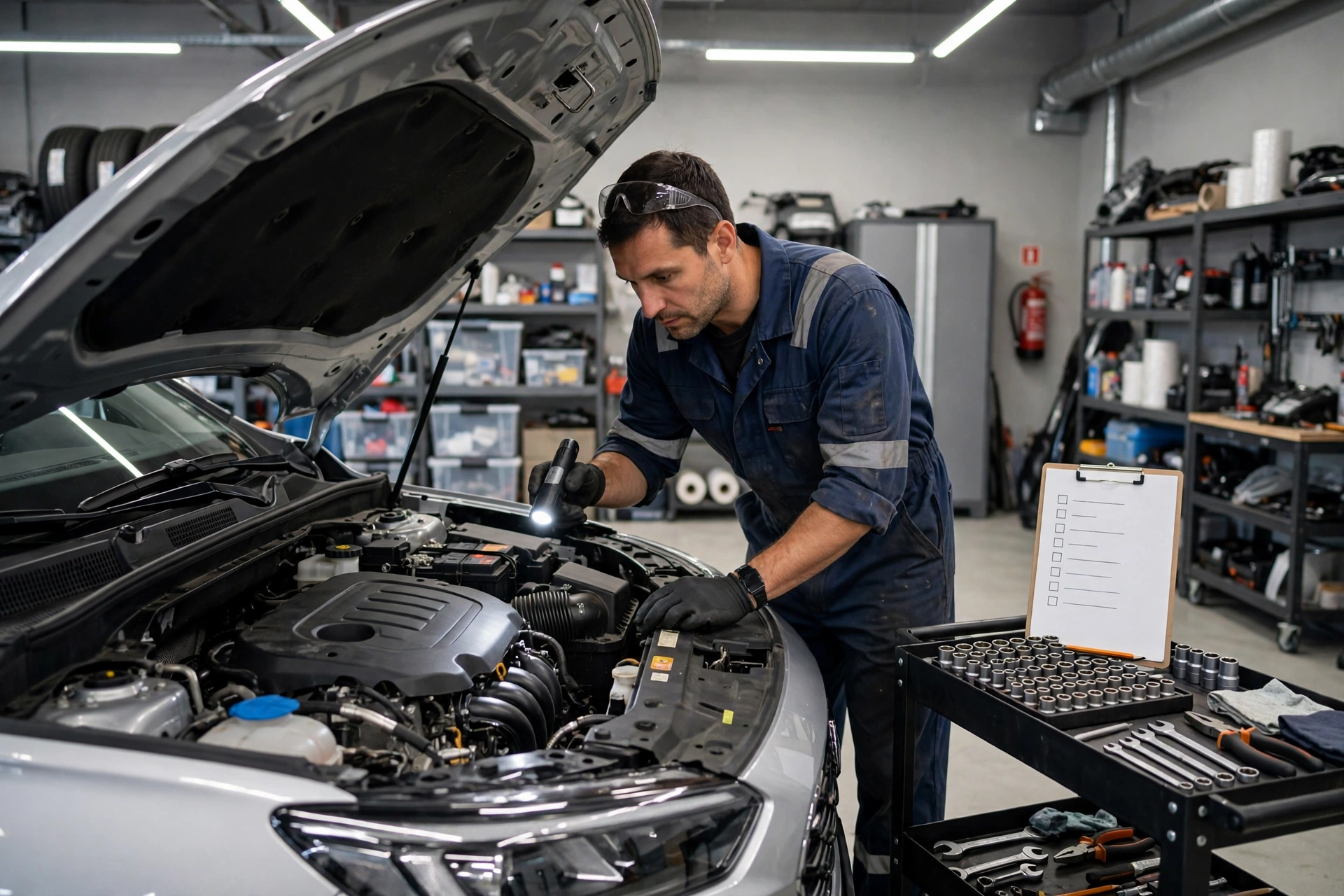
Check the engine oil level on a level surface with the engine off and cool, following the method in your manual, and top it up with the correct grade if it is low. Check the coolant level in its reservoir — never open a hot cooling system — and look for leaks underneath the car after it has stood overnight. Top up the windscreen washer fluid too: a long trip uses far more of it than a week of short drives.
Look at visible belts and hoses. A cracked, frayed, or squealing belt, and a soft, swollen, or brittle hose, are both worth a garage visit before departure — cheap parts that tend to fail when the engine works hardest.
Brakes, Steering and Suspension
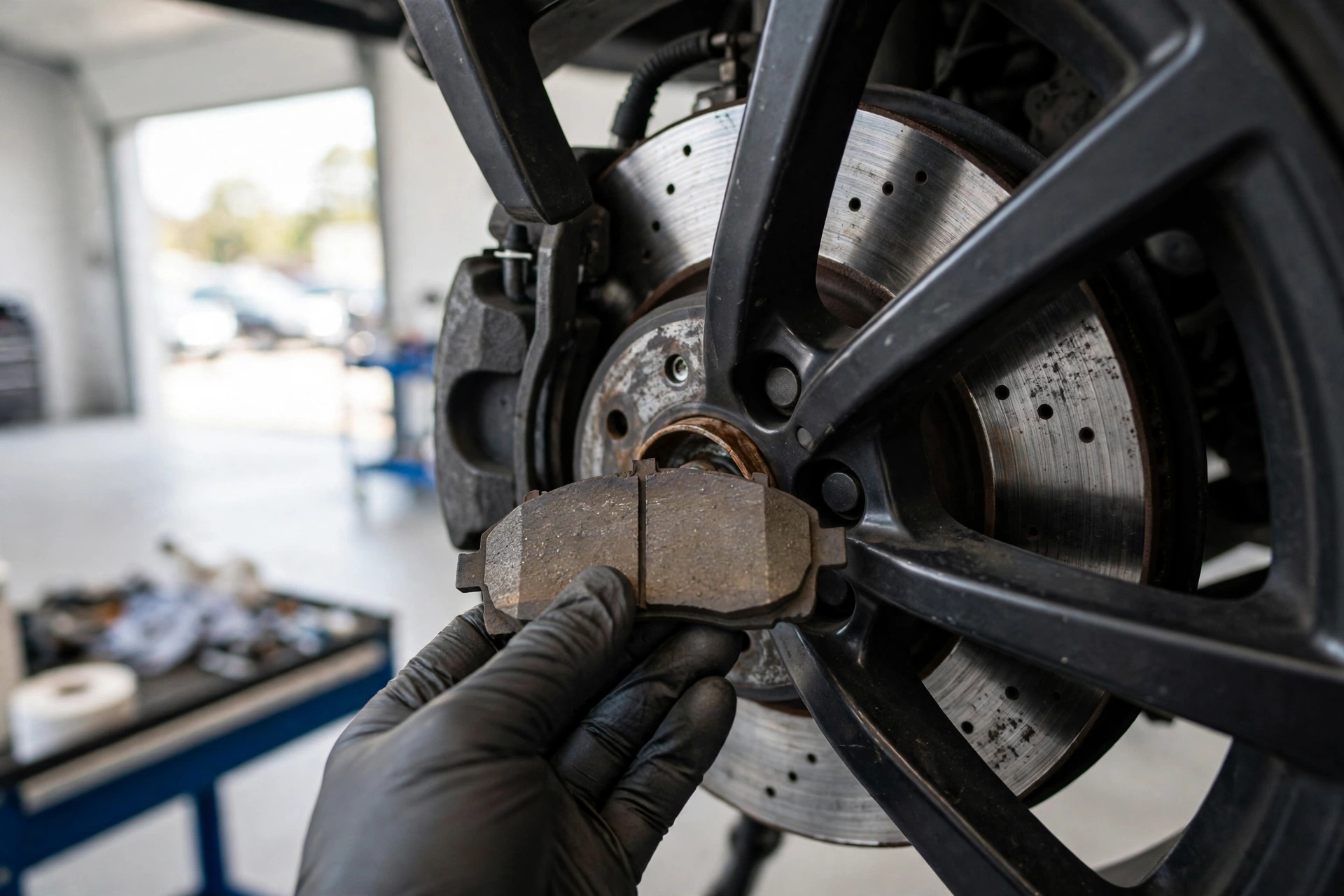
Brakes are not something to test for the first time on a busy motorway slip road. Before you leave, notice how the car has been behaving: does it stop smoothly, does the pedal feel the same as always, and does the car stay straight when you brake?
Any change is worth investigating. A squeal every time you brake, a soft or vibrating pedal, a car that pulls to one side, or a brake warning light are all signs to act on before a long journey, not during it. Our guide to the signs your car needs a brake inspection explains each sign and which ones mean you should not keep driving.
Also notice vague, heavy, or noisy steering, or a car that bounces more than usual — wear a long, loaded trip will only make worse.
Battery and Electrics: The Silent Trip-Stopper
A battery rarely gives a long warning. It turns the engine a little more slowly on cold mornings, the lights dim slightly at idle, and then one morning — often the morning you planned to leave early — it gives up entirely.
If your battery is several years old, or starting feels sluggish, have it tested before the trip — a test takes minutes. Check terminals are clean, tight, and free of corrosion.
Test every light before you leave — headlights, indicators, brake lights, reversing lights, hazards — asking someone to stand behind the car, or using a wall reflection. Also test wipers, washers, horn, air conditioning, and demister. A failed wiper blade on a rainy motorway is a small fault with a large effect.
Inside the Car: Safety Kit and Essentials
Pack for the possibility of a delay, not just for the destination. At a minimum, carry a warning triangle, a high-visibility vest, a torch, a first-aid kit, drinking water, and a phone charger that works from the car. In winter or through remote areas, add warm layers and a blanket.
Check documents too: licence, insurance, and breakdown cover, with the provider’s number saved in your phone as well as on paper. Tell someone at home your route and expected arrival, adjust mirrors and seat for hours of driving, and secure the sat nav mount before you set off.
Loading and Packing: Weight Changes How a Car Behaves
A fully loaded car brakes, steers, and rides differently from an empty one, so load it with that in mind. Put heavy items low and close to the centre, secure anything that could move in a sudden stop, and never pile luggage above the rear seatbacks where it could fly forward.
Check any roof box or bars are fitted, locked, and within the manual’s roof-load limit, then recheck tyre pressures after loading against the loaded figure — the step most people skip.
Our guide on how to plan a road trip on a budget in the USA covers fuel, stays, and daily costs, so car checks plus budget planning together leave fewer surprises.
Quick Checks to Repeat on the Road
Repeat a two-minute version once a day, or at each fuel stop: walk around the car, look at the tyres, glance underneath for fresh fluid, and clear windscreen and lights. Stop early for anything unusual — a new noise, smell, warning light, or change in feel. Pulling over is always cheaper than driving on and hoping.
When to See a Mechanic Instead of Checking Yourself
This checklist covers what a driver can sensibly check at home, not a professional inspection. Any brake symptom, unexplained leak, overheating, steering or suspension change, weak battery, or warning light that stays on should go straight to a garage — telling them the trip, load, and distance so they can judge urgency. A garage pre-trip inspection also covers the underside and items you cannot see.
Frequently Asked Questions
How far in advance should I do this checklist?
A few days before departure, leaving time to order parts or book a garage. Departure day should be only the quick walk-around, pressures, and fluids.
Should I get a professional inspection even if nothing seems wrong?
If the car is due a service, is older or high-mileage, or the trip is very long, yes. A professional check looks at the underside, brakes, and suspension in a way a driveway check cannot.
What is the single most important check before a long trip?
Tyres, followed closely by brakes — the only contact with the road, and the system you rely on most when something unexpected happens ahead. If you check nothing else, check those two properly.
Final Thoughts
A long road trip should be remembered for the places you stopped, not the hard shoulder you waited on. Running this checklist a few days early turns most trip-ending surprises into small jobs at home: a tyre inflated, a bulb replaced, a fluid topped up. Do the checks, and set off knowing the car is as ready as you are.