Picture this: a regular customer at your counter asks, “Do you take Bitcoin?” You hesitate — not because you dislike the idea, but because you have no idea what happens next. Do you need a special wallet? What if the price drops before you cash out? And what about taxes? Plenty of small businesses are curious about crypto payments but unsure how to start safely. It comes down to three choices: how you get paid, what happens to the money afterward, and how you keep records. This guide walks you through each one.
How Crypto Payments Actually Work
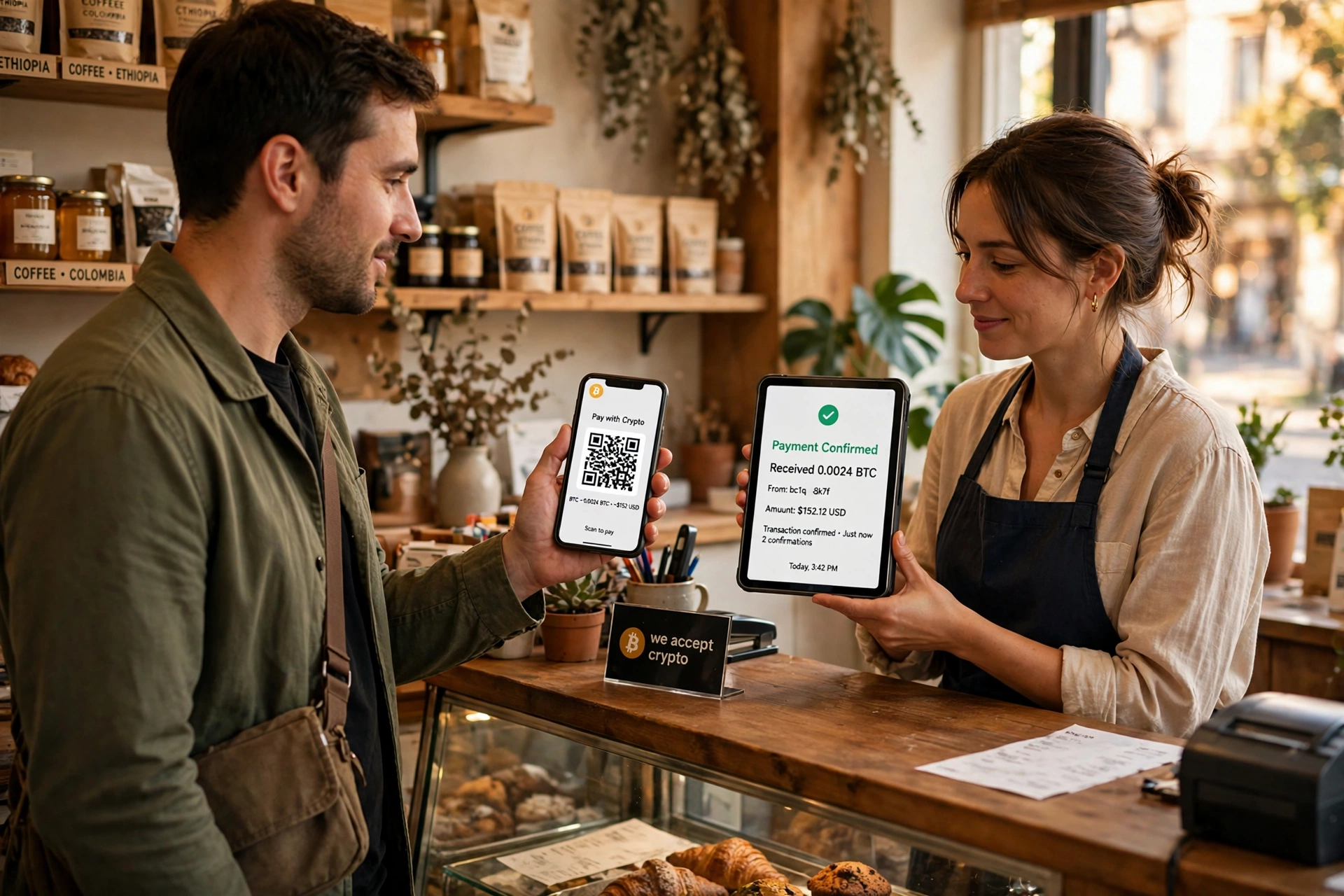
A crypto payment is simpler than it sounds. Your customer sends digital currency — Bitcoin, for example, or a stablecoin — from their wallet to your payment address. The transaction is recorded on a public ledger called a blockchain, and once it is confirmed, the money is yours. Most small businesses do not handle this directly. They use a payment processor that shows the customer a price in dollars, accepts the equivalent in crypto, and settles the payment. You keep pricing in dollars; the crypto part happens behind the scenes. One thing to know upfront: crypto payments are generally irreversible once confirmed, so confirm each payment before handing over goods.
First Decide: Hold Crypto or Convert It to Cash?
Before you choose any tool, decide what should happen to the crypto after a customer pays you. There are two main approaches, and this choice shapes everything else.
Convert to cash automatically. The processor converts each payment into dollars (or your local currency) and deposits it in your bank account. Your income stays predictable, and you never have to think about price swings. For most small businesses, this is the safest way to start.
Hold some or all of the crypto. You keep the digital currency in a wallet, hoping it gains value or using it to pay suppliers who accept it. This can pay off, but it exposes your revenue to price swings and adds accounting work.
If you are just starting out, automatic conversion is the sensible default.
Choose a Payment Processor You Can Trust
Unless you are comfortable managing wallets and blockchain transactions yourself, a payment processor is the practical route. It handles the technical side — generating payment addresses, confirming transactions, converting currency, and sending you reports. Many of these tools were built by crypto startups that specialise in business payments, so the market has more mature options today than it did a few years ago.
When comparing processors, check these points before signing up:
- Which coins are supported. Bitcoin and major stablecoins cover most demand; dozens of obscure coins add complexity for little benefit.
- Automatic conversion. Confirm same-day conversion to your bank currency, and find out how long payouts take.
- Fees. Compare processing, conversion, and withdrawal charges across two or three providers. Fees vary, so read the current pricing page rather than old reviews.
- Integration. Look for a plugin for your platform, such as WooCommerce or Shopify, or payment links and QR codes for in-person sales.
- Regulatory standing and support. Prefer an established provider with clear company details, a real support channel, and a track record. A dedicated crypto payment gateway is a good example of the kind of service to evaluate — read how it works and what it charges before you rely on it.
Set Up Checkout in Five Steps
Once you have picked a provider, setup is usually straightforward:
- Create a business account and complete its identity checks. Expect to provide business details and a bank account, as with any payment service.
- Connect it to your sales channel. Install the plugin on your store, or set up payment links and QR codes for in-person sales.
- Choose which coins to accept. Bitcoin plus one or two stablecoins is a sensible start.
- Turn on automatic conversion to your bank currency, so price swings do not touch your revenue.
- Test with a small payment before telling customers about it. Send a tiny amount yourself and confirm it arrives in your bank account with correct records.
Only announce the new payment option once the test payment has cleared end to end.
Handle Price Volatility Without Losing Sleep
Crypto prices can move sharply in a single day, and that is the worry most owners mention first. With automatic conversion switched on, volatility barely affects you: the processor locks in the exchange rate at the moment of payment and settles the dollar amount to you. Stablecoins help in the same way, because their value is designed to track the dollar.
Two habits keep the risk low. First, keep pricing in dollars, never in crypto. Second, if you do hold any crypto, treat it as a small experiment, not your operating cash — money for rent, wages, or suppliers should never sit in a volatile asset.
Taxes, Records, and the Rules in Your Country
Crypto payments are real income, and tax authorities treat them that way. In the United States, the IRS treats digital assets as property rather than currency, and crypto you receive in exchange for goods or services is taxed as ordinary business income. The IRS digital assets guidance explains what to report and which records to keep — at minimum, the date and time of each transaction, the type and amount of crypto received, and its fair market value in dollars at that moment. Rules differ by country, so if you operate outside the US, check your own tax authority’s guidance and talk to your accountant before your first crypto sale.
Keep crypto records separate from your personal finances: use a dedicated business wallet or processor account, save every invoice and settlement report, and reconcile crypto sales like card payments. If some customers follow Islamic finance principles, note that views differ on whether cryptocurrency is halal or haram — a question they may raise, though it does not change your tax duties.
Protect Your Business From Fraud and Scams
Accepting crypto safely means guarding the accounts and devices involved. A few practices cover most of the risk:
- Use the processor, not a personal wallet address. A public wallet address invites fake payment claims and is harder to track.
- Turn on two-factor authentication everywhere it is offered — your processor account, your email, and any wallet you hold.
- Wait for confirmation. Do not hand over goods until the payment shows as confirmed in your processor dashboard — a customer screenshot is not proof.
- Keep holdings in a secure wallet. A hardware wallet kept offline is far safer than an exchange account or a phone app.
- Train your staff. Only authorised people should access the dashboard, and everyone at the counter should know the rule: no confirmation, no goods.
Be wary of anyone claiming to be from your processor and asking for passwords or recovery phrases. Legitimate providers never ask for those.
Let Customers Know You Accept Crypto
Once everything is tested, tell people: a small sign at the counter, a payment badge on your checkout page, and a short post on your social channels. Mention it on invoices too. Keep the message simple — “We now accept Bitcoin and stablecoins” — and be ready to say which coins, exactly.
Frequently Asked Questions
Do I need to understand blockchain technology to accept crypto?
No. A payment processor handles the technical side; you only need to understand the business decisions — which coins to accept, whether to convert to cash, and how to keep records.
What happens if a customer sends the wrong amount?
Most processors handle under- or overpayments automatically, by requesting the difference or refunding the excess. Direct wallet payments have no such safety net — another reason to use a processor.
Is accepting crypto legal for a small business?
In most countries, including the US and much of Europe, it is legal, but you must report the income and follow local rules. A few countries restrict or ban crypto use, so check the rules where you operate first.
Can a customer reverse a crypto payment like a credit card chargeback?
Generally, no. Once confirmed on the blockchain, a crypto transaction cannot be reversed by the customer — protection from chargeback fraud, but also a reason to verify every payment before delivering goods.
Final Thoughts
Accepting crypto payments safely comes down to three decisions: use a reputable processor, convert payments to cash until you know the ropes, and keep clean records from day one. Start with Bitcoin and a stablecoin, test the full flow with a small payment, and let your customers know the option exists. If it brings you even a few extra sales, it has earned its place at your checkout.