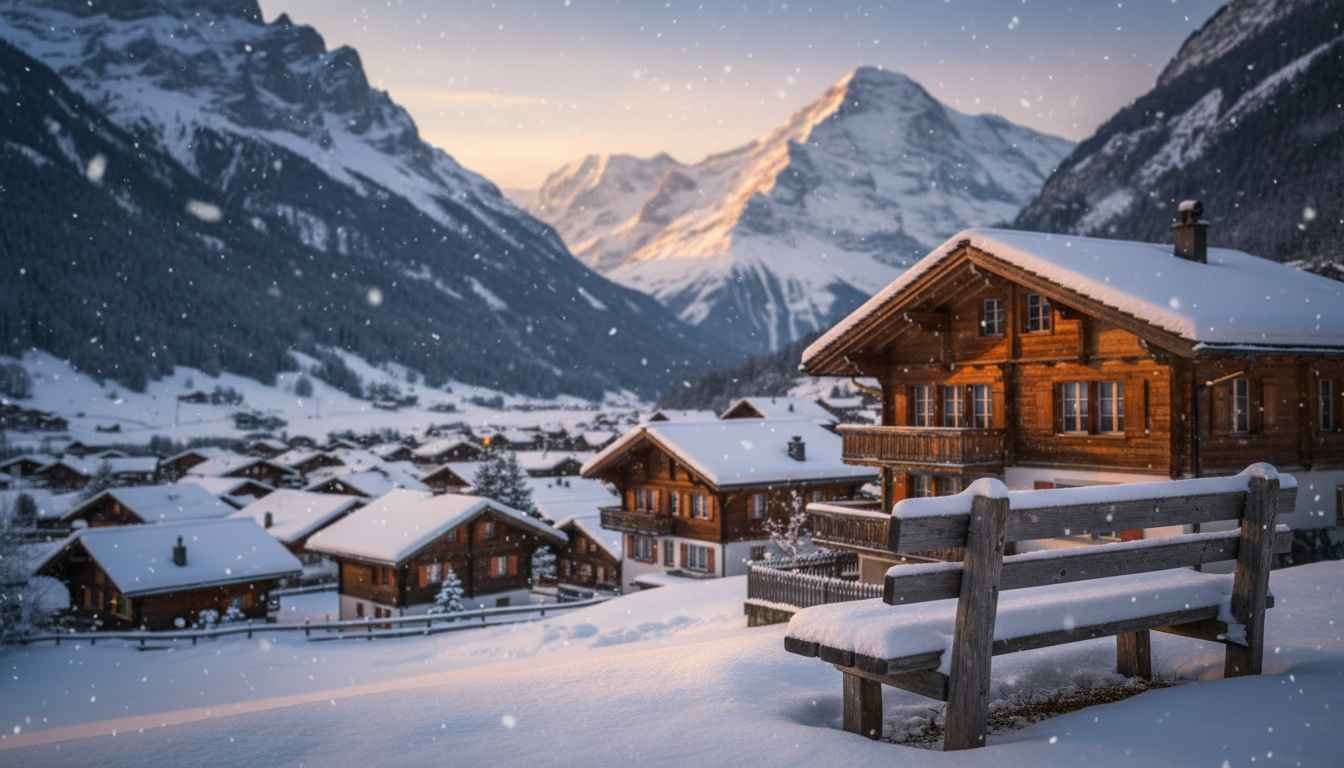
Step off the train in Zermatt on a clear winter morning and the Matterhorn is simply there, filling the end of the street like a postcard that forgot it was supposed to be a photograph. Or picture yourself on a Lucerne promenade at dusk, Christmas lights reflected in the lake, with the smell of roasted chestnuts in the cold air. Switzerland in winter is not one experience — it is skiing, scenic trains, lake cities, thermal baths, and festive markets, and the best trip picks the combination that suits you.
This guide compares the strongest winter destinations honestly, including what each one is not good for, so you can build a trip around your priorities rather than a generic list.
Zermatt: The Iconic Ski Resort
Zermatt, at the foot of the Matterhorn, is Switzerland’s most famous winter resort, and for good reason. It is car-free — you arrive by train — and its ski area is extensive, with slopes for a wide range of abilities and views that few resorts can match. The village itself is lively in the evenings, with restaurants and bars along its main street.
The trade-off is price and popularity: Zermatt is one of Switzerland’s most expensive resorts, and its slopes and restaurants are busy in peak weeks. Non-skiers will still enjoy the village, the Gornergrat railway viewpoints, and winter walks, but travellers on a tight budget may prefer a smaller resort as a base.
Lucerne: The Picturesque Lake City
Lucerne, in central Switzerland, is the best winter choice for travellers who want beauty without committing to a ski resort. Its medieval Old Town, the covered Chapel Bridge, and the lakefront are lovely in winter, especially when the Christmas markets are running. Nearby mountains — Pilatus and Rigi — offer snow, viewpoints, and easy excursions without requiring ski skills.
Lucerne works well as a first stop on a wider trip, or as a base for travellers who want culture, walks, and day trips rather than a full ski holiday.
Interlaken and the Jungfrau Region: Adventure and Scenery
Interlaken, between Lake Thun and Lake Brienz, is the gateway to the Jungfrau region, home to the Jungfraujoch — the highest railway station in Europe, often called the Top of Europe. The train journey up through tunnels inside the mountains to a world of ice and snow is an experience in itself, even for non-skiers.
The surrounding villages — Grindelwald, Wengen, and Mürren — offer skiing, winter hiking, and sledging, while Interlaken itself suits travellers who want activities plus lake scenery. If your group mixes skiers and non-skiers, this region is one of the easiest to please everyone.
St. Moritz and Davos: Classic Alpine Glamour and Quiet Valleys
St. Moritz, in the Engadin valley, is synonymous with luxury winter holidays: wide sunny slopes, frozen-lake events in season, and grand hotels. It suits confident skiers and travellers who enjoy a polished resort atmosphere — and who accept the prices that come with it.
Davos, the highest town in Europe, offers extensive skiing and a more understated, sporty character, with long valley trails for cross-country skiing and winter walking. Both resorts benefit from generally reliable snow, but neither is a budget destination.
Beyond the Slopes: Spas, Markets, and Scenic Trains
Some of the best Swiss winter days involve no skiing at all. Thermal baths in places like Leukerbad, in the Valais, let you soak in warm water while snow falls around you. Christmas markets in Zurich, Basel, and smaller towns offer crafts, food, and a festive atmosphere through December.
Switzerland’s scenic trains are a winter highlight in their own right. The Glacier Express, running between Zermatt and St. Moritz, crosses high passes and deep valleys in panoramic carriages — a full-day journey that many travellers rate as highly as any ski day. In winter, check timetables and book seats early, as popular routes sell out.
When to Visit Switzerland in Winter
The winter season generally runs from December to March, with the most reliable snow at higher resorts from January onwards. December suits market lovers and those who enjoy a festive atmosphere; January and February suit serious skiers; March brings longer days and softer snow. Lower-lying cities such as Lucerne and Zurich are enjoyable all winter, though they may have little or no snow in a mild year — plan city days around culture and food, not guaranteed snowfall.
Practical Tips for a Swiss Winter Trip
- Book trains and mountain excursions early in peak weeks; the Swiss Travel Pass can be good value for multi-day rail travel — compare it against your actual itinerary before buying.
- Dress in layers and bring proper winter footwear; village streets and station platforms can be icy.
- Budget realistically: Switzerland is expensive, and resort restaurants, lift passes, and hotels add up quickly.
- Check snow and lift conditions before travelling to a specific resort, especially early or late in the season.
- If you are comparing winter destinations more broadly, our guides to Slovakia in winter and Bulgaria in winter offer lower-cost alternatives with their own ski and mountain character.
FAQ
Do you need to ski to enjoy Switzerland in winter?
No. Lucerne, scenic trains, thermal baths, markets, and mountain railways all offer superb winter experiences without skis. Choose a base with good non-skiing options if your group is mixed.
Which Swiss resort is best for first-time skiers?
Smaller, lower resorts and the Jungfrau villages tend to be friendlier for beginners than the biggest, steepest areas. Book lessons early — a good instructor makes the first days far more enjoyable.
Is Switzerland in winter very expensive?
Yes, by most standards. Accommodation, dining, and lift passes are costly, especially in famous resorts. Staying in a smaller town, self-catering some meals, and using rail passes wisely can keep costs down without spoiling the trip.
Final Thoughts
The top places to visit in Switzerland in winter are not interchangeable — Zermatt for iconic skiing, Lucerne for lake-city charm, the Jungfrau region for mixed groups, and the great scenic trains for everyone. Pick the experience you want most, build your trip around it, and leave a day unplanned: in Swiss winter, the unplanned day is often the one with the clearest sky and the best light.