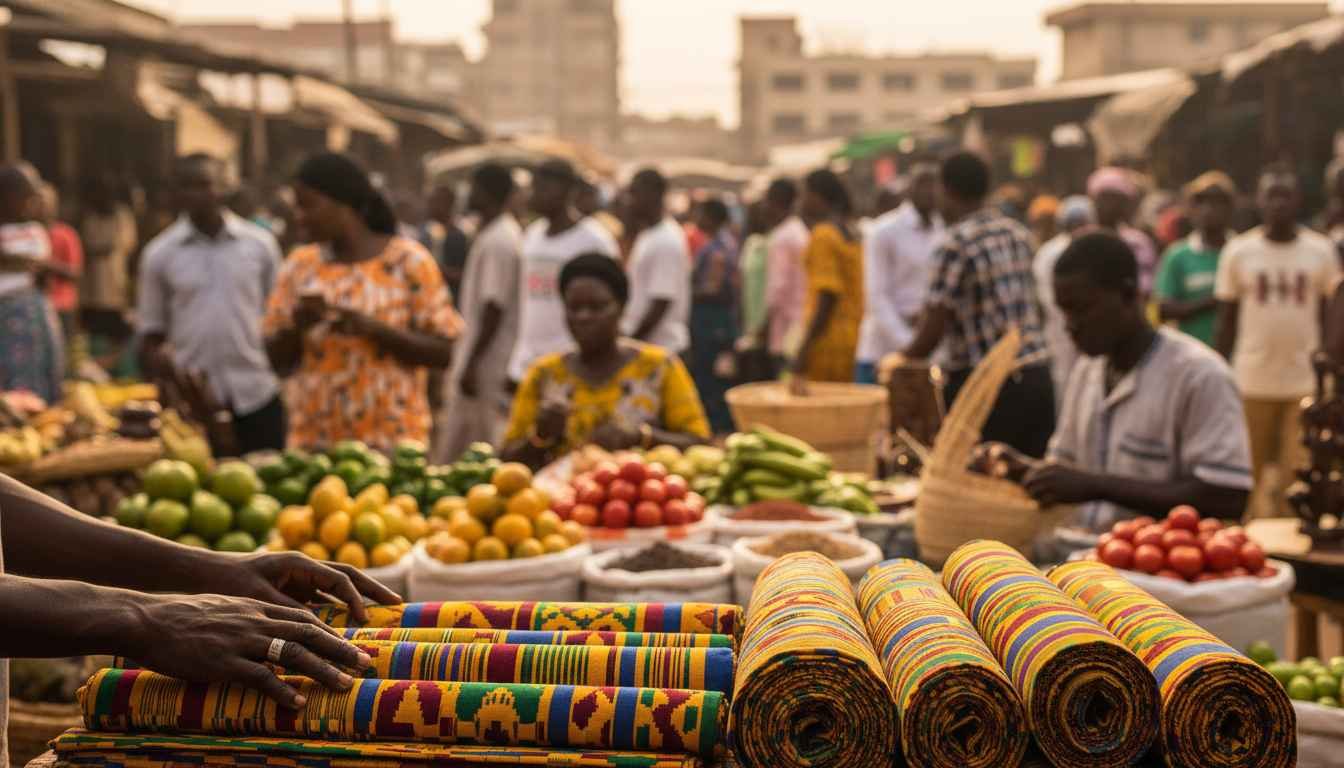
Accra greets you all at once: the smell of grilled corn from a street vendor, the colour of wax-print cloth in Makola Market, drums from a nearby compound, and the Atlantic breeze off Labadi Beach. Ghana’s capital is not a city of one famous sight — it is a city of layers, where a memorial park, a fishing harbour, a museum, and a beach can all fit into a single satisfying day. This guide picks out the places that genuinely reward a visit, and explains how to combine them without rushing.
Kwame Nkrumah Memorial Park: Start with the Story
A good first stop is the Kwame Nkrumah Memorial Park, dedicated to Ghana’s first president and a leading figure in African independence. The park’s mausoleum and museum tell the story of the independence movement in a compact, accessible way, and its gardens offer a calm introduction to the city.
Pair it with nearby Jamestown, one of Accra’s oldest districts, where the lighthouse stands above a working fishing harbour. Jamestown is best explored on foot with a local guide, who can explain the neighbourhood’s history and its present-day fishing community far better than a passing visit can.
National Museum and the W.E.B. Du Bois Centre: History in Depth
The National Museum of Ghana, in central Accra, displays artefacts from the country’s pre-colonial and colonial periods, including traditional crafts, royal regalia, and archaeological finds. It is a manageable size for a morning visit and gives context that makes the rest of the city — its markets, festivals, and neighbourhoods — much richer.
The W.E.B. Du Bois Centre, in a quieter part of the city, honours the African-American scholar and civil rights activist who spent his final years in Ghana. Its library, museum, and gardens are a thoughtful stop for visitors interested in the connections between Africa and its diaspora.
Makola Market: The Beating Heart of the City
No visit to Accra is complete without Makola Market, the city’s great commercial hub. Stalls spill over with cloth, spices, beads, household goods, and street food, and the market’s energy is unforgettable. Go with a guide or a confident local companion if it is your first time — the market is large, busy, and much easier to enjoy with someone who knows its layout.
Bargaining is part of the experience: offer a fair price with a smile, and be ready to walk away politely if it is not accepted. Keep valuables secure and carry small notes, as change can be hard to come by in busy stalls.
Labadi Beach: Accra’s Favourite Shoreline
Labadi Beach (also known as La Pleasure Beach) is Accra’s best-known city beach, popular with families and groups at weekends, when music, horse riding, and food stalls create a lively atmosphere. Weekdays are quieter and better for a relaxed swim and a long walk along the sand.
Be aware that Atlantic currents here can be strong: swim where locals swim, follow any lifeguard guidance, and treat the beach as a place for atmosphere and relaxation rather than serious open-water swimming.
Day Trips: Aburi Botanical Gardens and Cape Coast
For a change of pace, the Aburi Botanical Gardens, in the hills north-east of Accra, offer shaded paths, towering trees, and cooler air — a peaceful half-day escape from the city’s heat and noise. The gardens are well established and easy to combine with a drive through the surrounding hills.
A longer and more historically significant day trip is Cape Coast, a coastal town west of Accra known for its historic forts, including Cape Coast Castle, a UNESCO World Heritage Site that documents the transatlantic slave trade with sobering honesty. Allow a full day for the journey and the visit, and consider a guide for the castle tour — the history deserves proper context.
Culture and Festivals
Accra’s cultural calendar is anchored by festivals such as Homowo, traditionally celebrated by the Ga people in August and September, with music, dance, and food marking the harvest season. Dates and events vary from year to year, so check locally before planning a trip around a festival.
Throughout the year, the city’s live-music venues, art galleries, and restaurants — from chop bars serving local dishes to modern Accra eateries — offer a taste of contemporary Ghanaian culture that goes well beyond the sights.
When to Visit Accra
Accra is warm all year, with the drier months from roughly November to March generally the most comfortable for sightseeing. The rainy seasons, around April to June and again in September to October, bring short, heavy showers that rarely ruin a whole day but can disrupt travel. Whatever the season, plan outdoor sightseeing for the morning and late afternoon, and rest during the midday heat.
Practical Tips for First-Time Visitors
- Use ride-hailing apps or hotel-arranged taxis where possible, and agree fares in advance for street taxis.
- Carry cash in small denominations for markets and street vendors; cards are accepted in larger hotels and restaurants.
- Dress respectfully for religious and memorial sites, and ask before photographing people.
- Drink bottled or treated water, and try local food at busy, well-regarded stalls and restaurants.
- If you are collecting ideas for other warm-weather city-and-coast trips, our guide to the best place to visit in Brazil takes the same answer-by-traveller approach to a much larger country.
FAQ
How many days do you need in Accra?
Two to three days covers the main city sights comfortably. Add a day each for Aburi and Cape Coast if you want both day trips.
Is Accra safe for tourists?
Most visits pass without serious incident, especially with normal city precautions: keep valuables discreet, use trusted transport at night, and follow local advice. Check current travel guidance before you go.
What should you eat in Accra?
Try jollof rice, waakye, grilled tilapia with banku, and fresh tropical fruit from markets. Busy local restaurants and chop bars are usually the best guides to quality.
Final Thoughts
The best places to visit in Accra are not a checklist to rush through — they are a way into the city’s story, from independence history to market life to Atlantic beaches. Start with the memorial park and museums, let Makola Market surprise you, and finish with a beach afternoon or a day trip that puts the city in its wider Ghanaian context. Accra rewards visitors who take it at its own pace.