You step out into Kyoto on a winter morning, and the city feels calmer than in any other season. The air is crisp, the streets are quieter, and the smell of roasted tea drifts from small shops as you walk toward your first temple. With fewer crowds around you, you have room to slow down, look closely, and enjoy the details that make Kyoto so memorable.
Winter in Kyoto is not about nonstop snow. Snow is possible, especially on colder days, but it is not guaranteed, so a snow-covered scene should be treated as a welcome bonus rather than a certainty. What winter does reliably offer is clear light, peaceful temples, warming food, and a gentle pace that suits slow exploring.
Kinkaku-ji: The Golden Pavilion in Winter
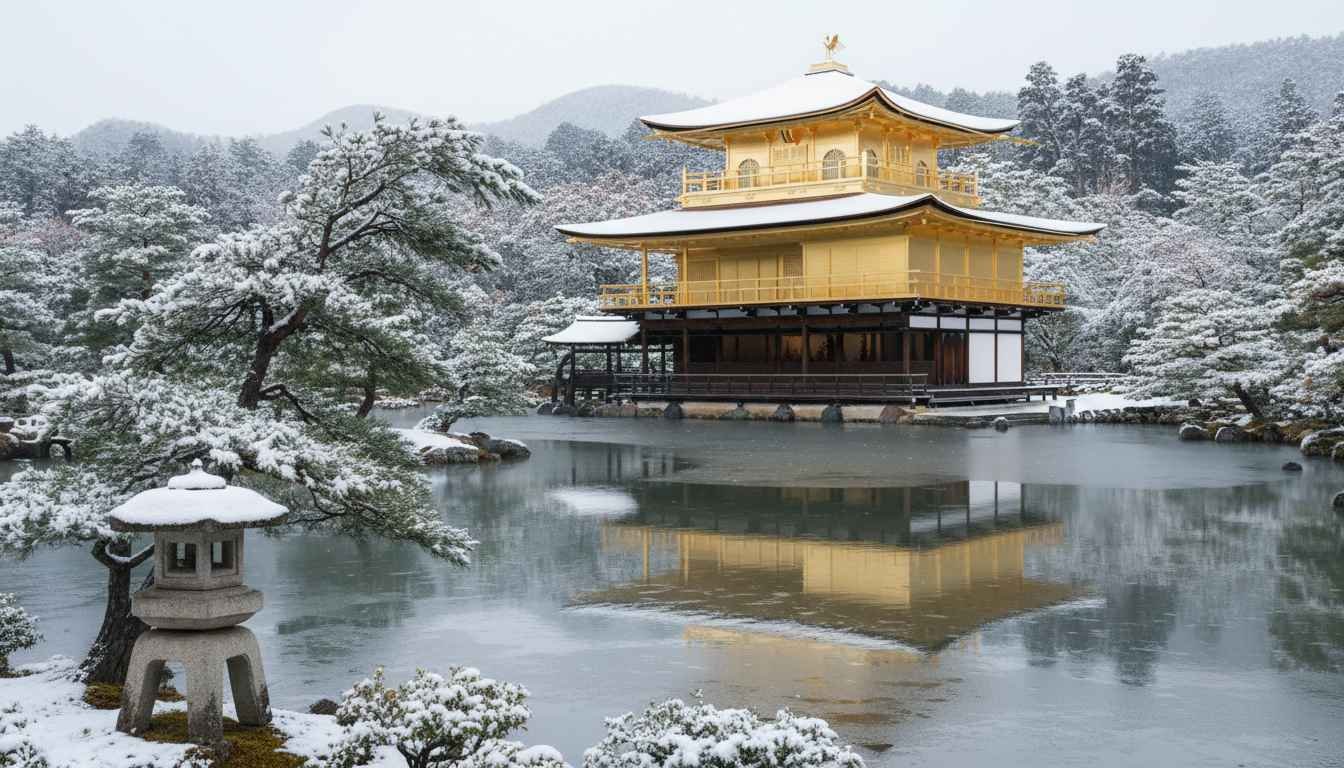
Kinkaku-ji, the Golden Pavilion, is one of the most rewarding places to visit in Kyoto in winter. The gold-covered pavilion stands beside a quiet pond, surrounded by pine trees and carefully kept gardens. On a cold, bright day, the colors feel sharper and the reflections in the water feel especially still.
If snow does fall, the scene becomes even more striking, with white snow setting off the gold of the pavilion. Even without snow, the visit is worthwhile for the calm atmosphere and the chance to walk the garden path without the heavy crowds of spring and autumn.
Fushimi Inari Taisha: A Walk Through the Torii Gates
Fushimi Inari Taisha is famous for its long paths lined with vermilion torii gates. In winter, you can walk beneath the gates in cooler air and with more space to pause for photographs. The walk uphill passes small shrines and wooded slopes, and you can turn back at any point if you prefer a shorter visit.
The lower paths are the busiest, while the higher trails grow quieter as you climb. Wear comfortable shoes, take water, and allow extra time so the walk feels relaxed rather than rushed.
Arashiyama: Bamboo Grove and Riverside Calm
Arashiyama is best known for its bamboo grove, where tall bamboo stalks rise on both sides of a narrow path. In winter, the grove feels quieter, and the soft light filtering through the bamboo creates a peaceful atmosphere for a slow walk.
After the grove, you can explore the wider Arashiyama area on foot, including riverside paths and small streets lined with shops and cafes. The river itself does not routinely freeze in Kyoto winters, but the cool riverside air and mountain backdrop still make this a pleasant place for an unhurried stroll.
Kiyomizu-dera: Views Over the City
Kiyomizu-dera is one of Kyoto’s most famous temples, known for its large wooden stage and wide views over the city. In winter, the view from the stage can be especially clear on a bright day, with rooftops and distant hills standing out against a pale sky.
The walk to the temple passes through preserved streets with traditional shops and teahouses. Take time to enjoy the approach as well as the temple itself, and visit early in the day if you prefer the quietest atmosphere.
Gion: Traditional Streets in the Quiet Season
Gion, Kyoto’s historic geisha district, is best explored on foot. Its narrow lanes, wooden machiya townhouses, and paper lanterns look beautiful in low winter light, and the quieter season makes it easier to appreciate the architecture without large crowds.
Walk respectfully through the residential lanes, keep noise low, and avoid blocking doorways or photographing people without consideration. In the evening, the lantern-lit streets feel particularly atmospheric, especially after a warm meal nearby.
Nishiki Market: Warm Food on a Cold Day
Nishiki Market is a covered shopping street in central Kyoto, filled with stalls selling pickles, tofu, seafood, sweets, tea, and seasonal snacks. In winter, it is an ideal place to warm up while tasting small portions as you walk.
Try a few different stalls rather than filling up at the first one, and look for seasonal items and local specialties. The market is also a good place to buy edible souvenirs, such as tea, pickles, and traditional sweets, to take home.
Warming Up: Onsen Baths, Kaiseki, and Matcha
After a cold day of walking, warming up is part of the pleasure of Kyoto in winter. A soak in an onsen-style bath can help you relax tired muscles, while a warm bowl of noodles or a hot drink can restore your energy for the evening.
For a special meal, consider a kaiseki dinner, a traditional multi-course Japanese meal built around seasonal ingredients and careful presentation. For something simpler, sit down for matcha and a sweet in a teahouse, and enjoy a quiet pause between sightseeing stops.
New Year’s Eve and Winter Illuminations
If you visit Kyoto around the New Year, you may encounter Joya-no-Kane, the traditional ringing of temple bells on New Year’s Eve to mark the passing of the old year and the arrival of the new one. Many temples hold bell-ringing events, and the atmosphere in the city on that night feels reflective and hopeful.
Winter illuminations also add warmth to cold evenings, with lights displayed at temples, gardens, and shopping streets during the winter season. Check local listings close to your visit for current displays, since dates and arrangements can change from year to year.
Tips for Visiting Kyoto in Winter
Pack for cold weather, even if snow is not forecast. A warm coat, layers you can add or remove, comfortable walking shoes, gloves, and a scarf will make temple walks and evening strolls much more comfortable. Temples and gardens often involve outdoor walking, so dress for time outside rather than for heated interiors alone.
Take advantage of the quieter season by starting early, visiting popular temples first, and leaving time for markets, teahouses, and neighborhood walks. If you enjoy planning cold-weather trips more broadly, you may also find ideas in this guide to the best places to visit in Bulgaria in winter. If Kyoto is part of a longer journey across Asia, you might also enjoy reading about places to visit in South Korea for BTS fans for a different kind of Asian destination itinerary.
- Dress in warm layers and wear comfortable shoes for temple paths and hillside walks.
- Start early at popular temples to enjoy the quietest atmosphere.
- Keep evenings free for illuminations, warm food, and relaxed neighborhood walks.
Frequently Asked Questions
Does it snow in Kyoto in winter?
Snow is possible in Kyoto in winter, but it is not guaranteed. Some winters bring a few snowy days, while other periods stay cold and dry. Pack for cold weather either way, and treat snow as a bonus if it arrives during your visit.
Is winter a good time to visit Kyoto?
Yes, winter can be an excellent time to visit, especially if you prefer quieter temples, clearer views, and a slower pace. The trade-off is cold weather and shorter daylight hours, so plan outdoor sightseeing for the middle of the day and evenings for food and illuminations.
What should you wear in Kyoto in winter?
Wear a warm coat, layers, comfortable walking shoes, gloves, and a scarf. You will spend a good amount of time outdoors at temples, gardens, and riverside paths, so warmth and comfort matter more than style alone.
Are temples and markets open in winter?
Most temples, shrines, and markets remain open through winter, although hours can vary by site and season. Check the official information for each place close to your visit, and allow flexibility in your plans for weather and early closing times.
Final Thoughts
Kyoto in winter rewards a slower kind of travel. You can walk beneath torii gates without rushing, stand before snow-dusted temples in quiet gardens, warm up with matcha and market food, and end the day beneath winter lights. Pack warmly, keep your plans flexible, and let the calm of the season shape your visit.