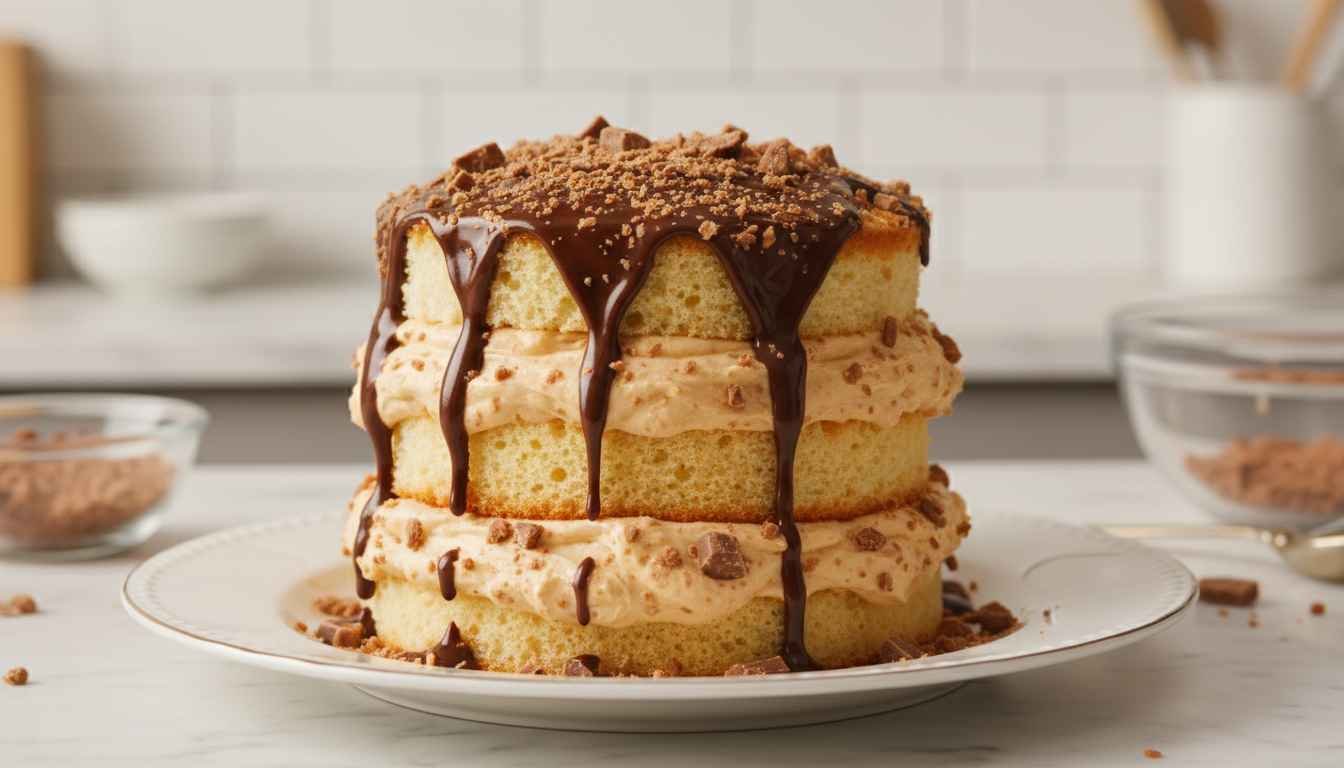
In 2025, everything changed. Dessert aficionados began demanding more than simple sweetness – they wanted layered textures, nuanced flavors, and a presentation that challenged traditional norms. Enter the butterfinger dessert with angel food cake: a confluence of airy sponge and crunchy candy, offering a combination that is both nostalgic and innovative.
Creating this dessert requires understanding the structural properties of angel food cake. Its low-density sponge provides a soft, pliable base that supports toppings without collapsing. Meanwhile, crushed Butterfinger bars introduce a high-density component, which can compromise the sponge if applied too liberally. Proper layering is critical, and using tools such as a lightweight silicone spatula or a Lancaster Cast Iron skillet for indirect baking ensures the cake maintains structural integrity.
Checklist for Ingredients
– Angel Food Cake: Pre-baked or homemade, 9–10 inches. Ensure it is fully cooled to prevent sogginess.
– Butterfinger Bars: Approximately 4–6 standard bars, crushed uniformly. Avoid powdery pieces that could settle into the sponge.
– Whipped Cream: 1–2 cups, preferably stabilized for layering. Provides moisture and binds candy pieces.
– Chocolate Ganache: Optional, ½ cup for drizzling. Adds depth of flavor and visual appeal.
– Vanilla Extract: 1 teaspoon for enhancing sponge and cream flavors.
– Decorative Toppings: Additional Butterfinger shards, chocolate curls, or edible gold dust for presentation.
Checklist for Preparation
– Ensure your workspace is clean and dry; angel food cake absorbs moisture easily.
– Crush Butterfinger bars using a rolling pin or food processor, aiming for pea-sized pieces rather than dust.
– Whip cream to soft peaks, fold in vanilla gently to avoid over-beating.
– If layering directly in the cake pan, consider a parchment liner for easier removal.
– For ganache, melt chocolate with a small portion of cream over a double boiler, allowing it to cool slightly before drizzling.
Layering and Assembly Checklist
– Start with a solid layer of angel food cake on a serving platter.
– Spread a thin layer of whipped cream evenly over the sponge to act as an adhesive for candy pieces.
– Sprinkle crushed Butterfinger evenly; avoid dense clustering that could weigh down the cake.
– Repeat layering if using multiple cake tiers, ensuring balance between sponge, cream, and candy.
– Optional: drizzle ganache over the top, letting it naturally flow along edges for aesthetic appeal.
– Chill in the refrigerator for 20–30 minutes to stabilize layers before serving.
Serving Checklist
– Use a serrated knife for clean slices, wiping between cuts to maintain visual appeal.
– Portion sizes should be modest; the dessert is intensely sweet due to candy integration.
– Pair with lightly brewed coffee or unsweetened tea to offset richness.
– Consider serving in individual clear cups for layered visual effect at events.
Potential Drawbacks
– Allergy Considerations: Contains peanuts in Butterfinger; unsuitable for individuals with nut allergies.
– Sugar Content: High sweetness may not be appropriate for diabetic guests or those limiting sugar intake.
– Texture Balance: Over-crushing candy can result in an overly dense topping, which compromises angel food cake’s signature lightness.
– Moisture Sensitivity: Angel food cake may become soggy if left in high-humidity environments. Consider serving shortly after assembly.
Expert Tips
– For a professional touch, lightly toast Butterfinger shards before layering to enhance crunch.
– Stabilized whipped cream maintains form longer during parties and avoids collapse.
– Using a Lancaster Cast Iron skillet for initial cake baking ensures even heat distribution, contributing to a consistent, springy texture.
– To create a visually striking presentation, alternate candy and cream layers in varying thicknesses for a structured yet organic look.
Cleaning and Maintenance Checklist
– After baking or assembly, gently clean all utensils and pans to prevent residual sugar from sticking.
– For cast iron use, avoid harsh detergents; season lightly to maintain surface integrity.
– Store leftover dessert covered, in a refrigerator, for up to 48 hours; consume promptly to preserve texture.
Summary
The butterfinger dessert with angel food cake is a nuanced creation that balances airy sponge and crunchy candy. By following a structured checklist – covering ingredients, preparation, layering, serving, and cleanup – cooks can achieve a dessert that is both visually striking and texturally satisfying. Potential drawbacks, including high sugar content and allergy considerations, should be noted. Utilizing tools like Lancaster Cast Iron cookware ensures consistency, highlighting the importance of professional-grade kitchenware in dessert execution.