Picture a small island of red dirt roads, potato fields and sandstone cliffs, wrapped in some of the warmest ocean water in Canada. Prince Edward Island may be Canada’s smallest province, but it packs a remarkable mix of literary landmarks, national park beaches, fishing villages and one very famous bridge into a place you can cross in about two hours. This guide to the top places to visit in Prince Edward Island is arranged in an order that works well as a real itinerary, from the must-see icons to the quiet corners most visitors miss.
1. Green Gables Heritage Place and Cavendish
Start where most PEI trips start: the farmhouse that inspired Anne of Green Gables. Lucy Maud Montgomery published her beloved novel in 1908, basing the village of Avonlea on Cavendish, the real community where she grew up. The federal government acquired the farmhouse in 1936, and today Green Gables Heritage Place is a Parks Canada site where you can tour the famous green-gabled house, walk the Haunted Wood and Lover’s Lane trails Montgomery named in her books, and visit the grounds that put this island on the literary map. Pair it with Cavendish Beach next door for a full day on the north shore.
2. Prince Edward Island National Park
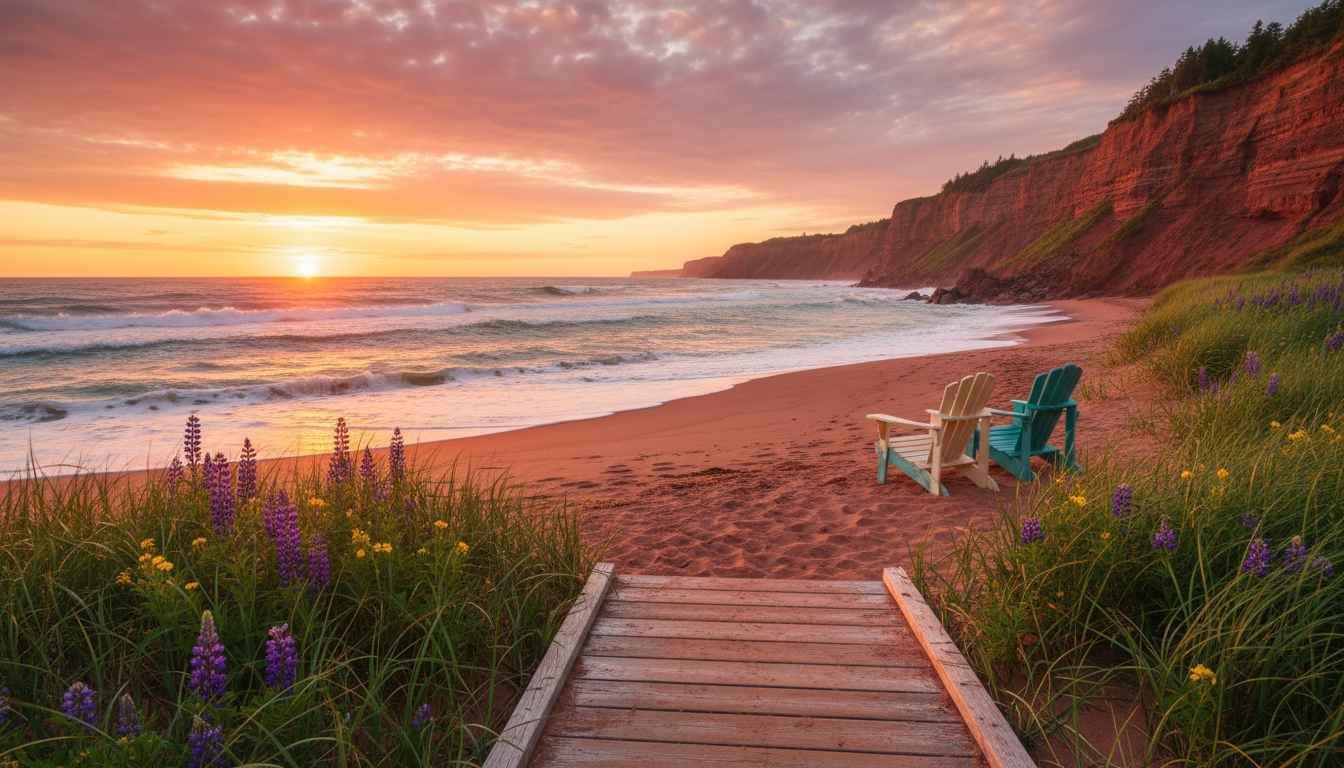
Established in 1937, Prince Edward Island National Park protects the island’s most striking coastline: about 27 square kilometres of red sandstone cliffs, dunes, wetlands and roughly 65 kilometres of shoreline along the Gulf of St. Lawrence. The park is split into three sections. The Cavendish-North Rustico section holds the famous Cavendish Beach with its red sand. The Brackley-Dalvay section runs past Brackley Beach to the Victorian-era Dalvay-by-the-Sea, a historic inn inside the park. The Greenwich section, added in 1998, has the island’s largest parabolic dunes, reached by a 4.5-kilometre floating boardwalk through wetlands to a pristine beach. Hiking, cycling, camping and swimming are all on the menu, and sections of beach close seasonally to protect nesting piping plovers.
3. Charlottetown, the Birthplace of Confederation
PEI’s small capital punches above its weight. Charlottetown hosted the 1864 conference that led to Canadian Confederation, which is why the city is known as the Birthplace of Confederation. Province House, the historic building where the conference took place, anchors a walkable downtown of brick streets, galleries, theatres and the waterfront at Victoria Row. The Confederation Centre of the Arts hosts the long-running Charlottetown Festival, and the city’s restaurants are the easiest place on the island to eat your way through local mussels, oysters and lobster. Plan at least a full day here.
4. The Confederation Bridge
You will likely cross this one on arrival, but the Confederation Bridge deserves to be treated as an attraction in its own right. At 12.9 kilometres, it is Canada’s longest bridge and the world’s longest bridge over ice-covered water, linking Borden-Carleton on PEI with Cape Jourimain in New Brunswick. It opened to traffic in 1997, ending the island’s centuries of ferry-only access. Stop at Gateway Village on the PEI side for shops and exhibits about the crossing, then drive the graceful curve across the Northumberland Strait — the toll is collected only when you leave the island.
5. Victoria-by-the-Sea
Halfway between the bridge and Charlottetown, this tiny south-shore village is the island’s prettiest detour. Victoria-by-the-Sea clusters around a small harbour with painted fishing shacks, artisan galleries and the intimate Victoria Playhouse. It takes about an hour to wander the whole village, which is exactly the point — browse the shops, have a bowl of seafood chowder, and watch the fishing boats come and go.
6. Basin Head Provincial Park and the Singing Sands
East of Souris lies one of the island’s most unusual beaches. Basin Head is famous for its “singing sands”: under the right conditions the white sand squeaks and whistles beneath your feet as you walk. The beach is supervised in season, and the small bridge at the harbour channel is the site of a beloved local tradition — running and jumping off the bridge into the channel below. Arrive early on warm days; the parking lot fills fast.
7. Summerside and the Western Shore
Prince Edward Island’s second-largest city makes a good base for the island’s west. Summerside’s waterfront has been reworked into Spinnakers’ Landing, a boardwalk of shops and restaurants, and the city hosts the College of Piping and Celtic Performing Arts, a nod to the island’s Scottish heritage. From here you can explore the gentle farmland and quiet beaches of the western tip, including the bottle houses of Cap-Egmont — a folk-art village built from tens of thousands of glass bottles.
8. Souris and East Point
The northeast corner of the island feels a world away from Cavendish. Souris is a working fishing town with a pretty harbour and beach, and beyond it the road runs out to East Point, the island’s eastern tip, where the waters of the Gulf of St. Lawrence meet the Northumberland Strait. The East Point Lighthouse stands watch over the meeting of the currents, and the coastal drive out here — past farms, cliffs and coves — is one of the best on the island.
9. Lennox Island
Off the northwest shore, Lennox Island is home to a Mi’kmaq First Nation community and offers visitors a chance to engage with the island’s Indigenous heritage. Cultural experiences on the island include traditional crafts, storytelling and food, adding a dimension to a PEI trip that goes beyond beaches and lighthouses. Check ahead for seasonal programming before you go.
10. Point Prim and Wood Islands
On the south shore, the historic Point Prim Lighthouse is worth the detour for its distinctive round brick tower and wide views over the strait. A few minutes east, Wood Islands is where the ferry sails to Caribou, Nova Scotia — the island’s second connection to the mainland. Even if you are not taking the ferry, the lighthouse park at Wood Islands is a peaceful spot to watch the boats cross.
Practical Tips for Visiting Prince Edward Island
You have two ways onto the island: the Confederation Bridge from New Brunswick, or the ferry between Wood Islands and Caribou, Nova Scotia. The island is compact, and a rental car is by far the easiest way to get around — distances are short, but public transit is limited. Summer and early fall bring the most activity, with beaches, festivals and most attractions operating seasonally, so confirm opening dates for anything time-sensitive before you travel.
FAQ:
How many days do you need on Prince Edward Island?
Most first-time visitors find three to four days enough to cover the highlights: Green Gables, the national park, Charlottetown and one or two coastal drives. A full week lets you slow down and add the eastern and western tips.
How do you get to Prince Edward Island?
Drive across the 12.9-kilometre Confederation Bridge from New Brunswick, or take the ferry from Caribou, Nova Scotia to Wood Islands. Both crossings are scenic in their own right.
Is Prince Edward Island good for families?
Yes. The beaches are shallow and relatively warm, Green Gables delights young readers, and the island’s small scale means short drives between stops — a combination families tend to love.
What is Prince Edward Island famous for?
Anne of Green Gables, red-sand beaches, potatoes, fresh seafood (especially mussels, oysters and lobster), the Confederation Bridge, and its role as the Birthplace of Canadian Confederation.
Final Thoughts
What makes Prince Edward Island special is not any single sight but the way the whole island fits together: a literary landmark in the morning, a national park beach by afternoon, and a harbour-side lobster dinner by evening — all within an hour’s drive. Work through this list in order and you will see the island the way it deserves to be seen: slowly, with the windows down. And if PEI is one stop on a wider trip, our guide to the best places to visit in Eastern Canada covers Nova Scotia, Newfoundland and Quebec next door.