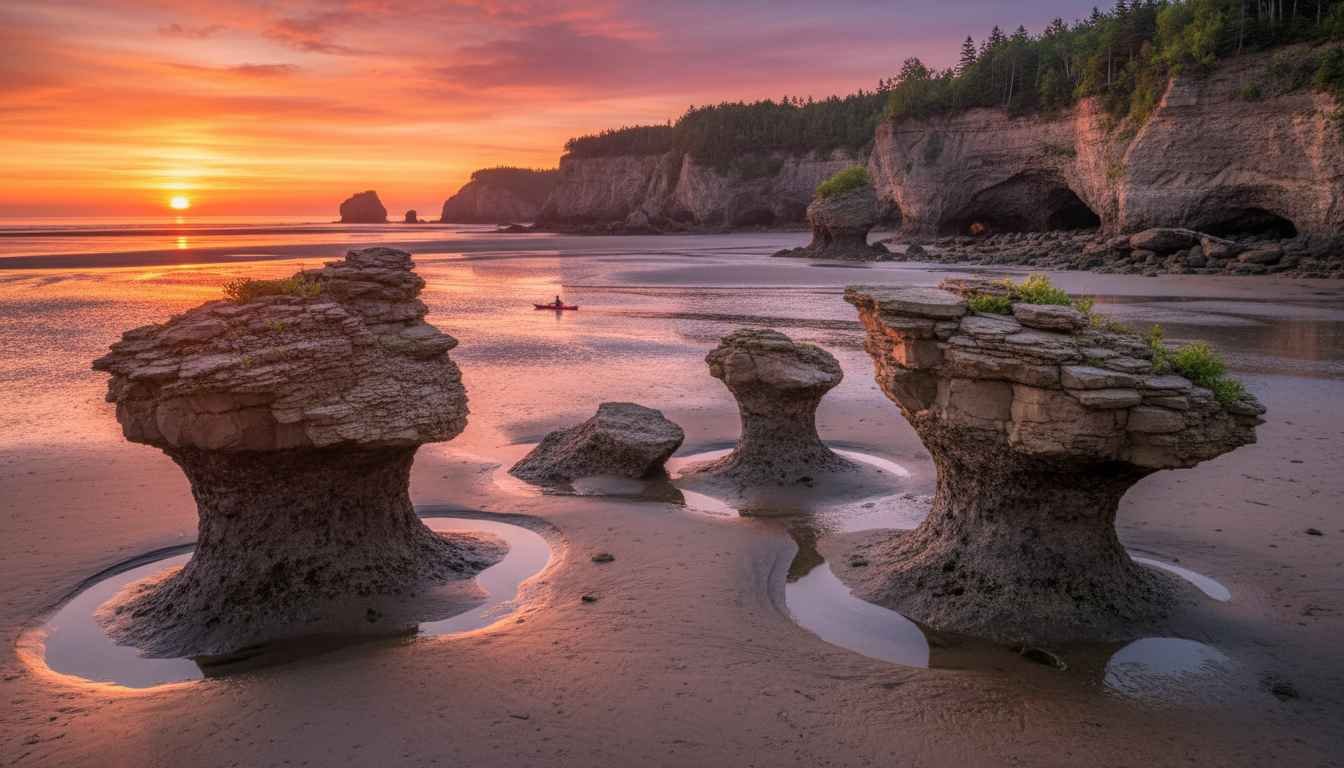
Stand on the Cabot Trail as morning fog lifts off the Gulf of St. Lawrence, or walk the cobbled streets of Old Quebec while French drifts out of a bakery doorway, and you will understand why eastern Canada refuses a single winner. Asking for the one best place here is like asking for the one best room in a very large house — the answer depends on whether you want coastline, wilderness, French culture, or a quiet island.
Eastern Canada, in the sense most travellers use it, covers the Atlantic provinces and Quebec, with Ontario often included. This guide compares the strongest options honestly, so you can choose the region that fits your trip instead of trying to cover a continent-sized area in a week.
How to Choose: Coast, Culture, Wilderness, or Island Calm
Start with the feeling you want. Dramatic coastal drives and seafood belong to Nova Scotia and Newfoundland. European atmosphere and city culture belong to Quebec. Wilderness and geology belong to Gros Morne in Newfoundland. Slow island days belong to Prince Edward Island. Trying to combine all four in one short trip means most of your holiday happens on the road or in airports — pick one or two regions and enjoy them properly.
Nova Scotia: The Classic Coastal Road Trip
Nova Scotia is the easiest Atlantic province to love on a first trip. Halifax, the provincial capital, combines a working harbour, a historic citadel, and a lively food scene, and it makes a practical base. From there, the Cabot Trail around Cape Breton Island is one of North America’s great scenic drives: cliffs, fishing villages, hiking trails, and viewpoints over the Gulf of St. Lawrence.
Elsewhere in the province, the South Shore offers lighthouse towns such as Peggy’s Cove and Lunenburg — the latter a UNESCO World Heritage Site known for its colourful waterfront — while the Annapolis Valley is wine and farm country. Nova Scotia suits travellers who want a road trip with good food, friendly towns, and scenery that changes every hour.
Newfoundland and Labrador: Rugged and Unforgettable
Newfoundland is wilder, remoter, and more distinctive than anywhere else in the region. Gros Morne National Park, a UNESCO World Heritage Site, showcases fjords, dramatic cliffs, and geology that draws visitors from around the world, with hiking trails ranging from gentle coastal walks to the demanding Gros Morne Mountain route.
The island’s outport towns, whale-watching opportunities in season, and the colourful row houses of St. John’s give the province a character all its own. It suits travellers who enjoy long drives, changeable weather, and places that feel genuinely far from home — and who are happy to plan around ferry and flight connections.
Quebec: French Culture in North America
Quebec offers something no other eastern Canadian destination can: a French-speaking culture with deep roots. Quebec City’s Old Town, also a UNESCO World Heritage Site, feels European in a way that surprises first-time visitors — stone walls, narrow lanes, and a château-style hotel overlooking the St. Lawrence River.
Montreal, by contrast, is a large, modern, bilingual city with a celebrated food scene, festivals, and neighbourhoods that reward wandering. Together, the two cities make a superb cultural trip, especially for travellers who want museums, restaurants, and city walks rather than wilderness.
Prince Edward Island: The Peaceful Retreat
Prince Edward Island, Canada’s smallest province, is the region’s gentle option: red sand beaches, rolling farmland, cycling along the Confederation Trail, and villages with a literary heritage tied to Anne of Green Gables. It is small enough to explore at a relaxed pace, and its seafood — mussels, oysters, and lobster in season — is a highlight in itself.
PEI suits couples, families, and anyone who wants a slower holiday. For a fuller picture of the island, see our guide to the top places to visit in Prince Edward Island.
Halifax and the Maritime Cities
If you prefer cities to wilderness, Halifax anchors a Maritime trip that can also include Saint John in New Brunswick, with its reversing falls and historic uptown, and Charlottetown, PEI’s compact capital. These cities are walkable, affordable by Canadian standards, and full of the maritime character — harbours, seafood, and local music — that defines the region.
Travellers planning a wider Atlantic-coast journey may also enjoy comparing the American side in our top ten places on the East Coast.
When to Visit Eastern Canada
Late spring through early autumn (May to October) is the main season, with the warmest weather in July and August. September and early October bring fall foliage — spectacular in the Maritimes and Quebec — and fewer crowds. Winter brings snow, ice, and, in some areas, winter festivals, but also short days and possible travel disruption; it suits travellers who specifically want a winter experience rather than general sightseeing.
Practical Tips
- Distances are large: check driving times before combining provinces, and consider flying between regions.
- Book ferries, popular hotels, and national park accommodation early in summer.
- In Quebec, a few French phrases go a long way, though English is widely understood in tourist areas.
- Pack layers even in summer — coastal weather changes quickly, especially in Newfoundland.
- Carry a card and some cash; smaller towns and rural stops may not take every payment method.
FAQ
What is the best place to visit in eastern Canada for first-timers?
Nova Scotia is the easiest first choice: Halifax plus the Cabot Trail gives you coastline, towns, and food in a manageable road trip. Quebec City and Montreal are the best pick if you prefer cities and culture.
How many days do you need in eastern Canada?
Seven to ten days suits one or two regions well. Covering several provinces properly needs two weeks or more, with flights between distant regions.
Is eastern Canada family-friendly?
Yes. Beaches, cycling trails, museums, and wildlife tours suit families, though long drives between regions need planning with younger children.
Final Thoughts
There is no single best place in eastern Canada — there is a best place for your trip. Choose coastline, culture, wilderness, or island calm, give it enough days, and let the region’s slower pace do its work. Eastern Canada rewards travellers who stop trying to see everything and start enjoying where they are.